
Wont to Wonder
Giving into the Misgivings: Pushing Pedals
June 18, 2013
Chicago, IL
“Gather ye rosebuds while ye still may…”
Art making is risk taking. With creation comes a deep sense of vulnerability. Art bares one’s soul. Only through that process may the artist achieve the sense of universal experience necessary to appeal to all audiences.
As artist, I ask myself if my soul possesses enough depth to speak to a universal audience. Have my experiences shaped a work that will convey a message to my viewer?
Benjamin notes that a work of art may be relevant only to the particular epoch in which it was created. Every artist wrestles with the misgivings about whether or not his or her art is able to even successfully reach one’s own age, much less transcend the test of time.
My journey isn’t about that. It is a personal quest I must take, one to discover my own mettle, my own resolve to see a project through to its completion, one push of a pedal at a time.
Leonardo DaVinci wrestled with exactly this same dilemma, rarely finishing a single piece, and often, because of his experimentation, even those pieces he did finish quickly began to deteriorate. His inability to successfully execute a task cost him his job on many occasions, and he jumped from one location to another, and his best work, his Notebooks, was not executed under the auspices of artist but civil servant.
Am I DaVinci? Absolutely not, although lately I feel as though I am as displaced as he often found himself, wandering from place to place, trying to find somewhere I may call home.
And yet I am still searching, and for now, I am ready to share a small bike trailer with my dog as we seek a place we may call home… And as I do, if I happen to make art, that will be an additional perk of my quest.
“use your time/ For having lost but once your prime/ You may for ever tarry”
The Perfect Fit: A Girl’s Best Friend
June 24, 2013
Chicago, IL
I mounted them, one after another, only to be met with the same exclamation, “Hm. You were right. It doesn’t fit, does it?” Followed by, “Well, I don’t have what you need. Perhaps you should try going to my friend. Here is his number.” They were bewildered, and I would walk away frustrated. Again.
Why is it a special-made, customized fit is so difficult to obtain? Walter Benjamin hailed ready-made products to be instrumental in minimizing class distinction. Fashion, once a leisure only of the most wealthy citizens, was, at the end of the nineteenth century, suddenly accessible to all. Or at least for those of “average” size.
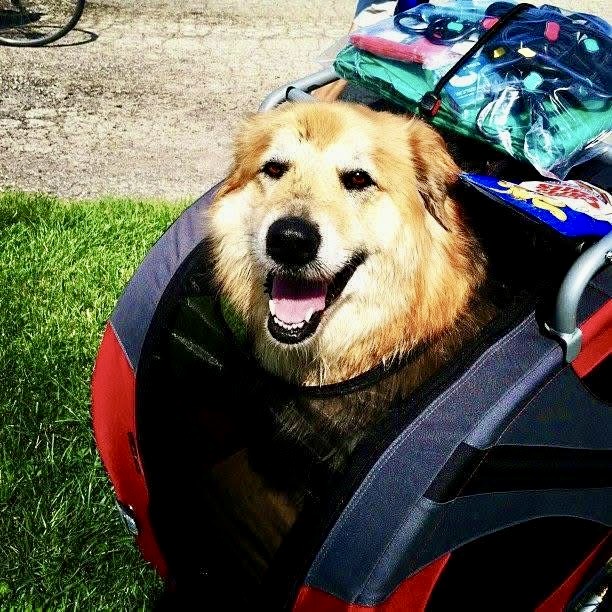
I have lived with it my entire life, modifying my own sense of style with skirts—often creatively pinned up with a brooch, cinched up with a bow, or altered into a “baby-doll” dress with a wide belt—rather than slacks because one may always purchase a shorter length skirt and imagine it is supposed to fit right at the ankle. My generous upper curves can easily accommodate the extra few inches in the length of whatever shirt or blouse I may wear, although necklines are always plunging, showing off the curves a bit too nicely for most people’s tastes.
But other dry goods are different, more problematic. How, for example, does one order alterations on the length of a mummy sleeping bag, rain slicker or bicycle without paying exorbitant prices? After the fifth bike shop, I returned to the one place that had satisfactorily met my needs before: Bike and Roll Chicago. The sales staff and mechanics have always been helpful, quickly prepping the refurbished bikes, as quickly rolling out useful riding tips: routes to avoid, packing cargo, staying dry, changing tires should I be met with that turn of bad fortune.
With the proper equipment, comfortable frame and effective tire tread, I thought we would quickly be on our way.
I was wrong.
A crying child has always been my pet peeve. Even when I had my own. “Train up a child…” As parent, it had always echoed in the back of my mind while making decisions. If a child is crying, it needs care. Not discipline, and I often wince when I hear a crying child being scolded, belittled, or, worse yet, further injured through a “sound spanking” for its wails. Because of my discomfort from crying children and disgust for bad parenting, I do what I can to avoid most places where I encounter it—grocery stores, malls, and church.
You know what they say about karma?
I had taken the necessary steps to ensure our first experience would be satisfactory. Six miles of them, to be exact. I had finally found the right equipment, had a number of hidden rewards tucked into all the right places, and had reassuringly, coaxingly convinced her it would be perfect fun. I was wrong. She wailed. Wriggled. Howled. Drooled.
Poor girl, as it turns out, would prefer to limp along beside me and my perfect frame towing my perfect trailer, my perfect sleeping bag, my perfect rain slicker, ignoring the treat awaiting her on her pillow inside.
Not that I blame her. I, too, prefer to be in control of every move I make. She and I are just special like that, loving our custom-made fit.
Always An Adventure
June 30, 2013
Du Page, IL

Thought for the day: how often do we speed past somewhere in our hurry to get to our next destination? And where has it gotten us?
By the time I finished fifth grade, I weighed only forty pounds. My mother, a single woman who inhumanly worked long hours to support her five children after her divorce was negligent at best, abusive at worst. I was the lucky one with three older sisters remaining at home after my parents’ divorce who played various roles normally assumed by both mother and father, while my brother (a few years older than myself) and I just played.
We played hard, having little supervision, engaging in rousing rounds of garbage dumpster hide and seek, shopping cart bumper cars, sewer pipe spelunking. Whatever we could find to explore, we did, and we did it with vigor, riding our bikes from one destination to the next, never quite sure where our destination would be, but finding it along the way.
I was, as what an older generation would identify me, a “scrapper.” Tough enough to figure my way out of a jam, tiny enough to squeeze my way into anything, and uncontrolled enough to have to hone the aforementioned skills to an art.
In addition to playing hard, my brother and I read hard. Reading programs nor community or school outreach encouraged us to read; just our need to escape our own meager worlds. My escape was fairy tales, the Bible, and mysteries. His were books on theology, which may explain why he is pursuing his third Master’s at yet another religious school.
Yesterday was our all-school reunion. Of the majority of our peers, we have the highest degrees, travelled abroad more frequently, and smile more broadly. Our self-directed play and intellectual exploration taught us how to direct our own lives, facing obstacles with the same defiance we once directed toward authority figures or scornful peers.
Last night, as I rode down the Great Western Trail, I learned a few more things: trees create the most delightful tunnel I have ever been in, and crushed limestone glows beautifully in the dark, seconded in magnificence only to the fireflies that felt like kisses as they brushed glowingly against my skin as I pedaled to my next destination, one chosen with the same arbitrariness as those I had in my youth.
According to a storybook I once read, a will-o-wisp will light one’s way to happiness and good fortune. If that is the case, because I have taken the time to slow down and watch for them, I know I am at least on the right path, with the glow of the fire flies showing me the way.
Fireworks and Fireflies
July 4, 2013
DeWitt, IA
As I arrived, the lake at Killdeer County Park was painted pink and purple in the setting sun. Fourth of July weekend, and two Mennonite families, with the women wearing their traditional headgear, were fishing while two boys ran along the edge of the lake. I hurried past on my bike, or at least as close as one can get to hurrying when dragging a bike trailer with 100 plus pounds of fur and equipment behind. I had spotted the pine tree from my approach on the highway, saw it was an empty spot, and wanted to get settled before nightfall with enough time to watch the fading colors.
Sunset. I had missed it so desperately in the concrete jungle. The few times I was silly enough to mention it, people scoffed, noting that I just didn’t pay high enough rent. Sunset, it seems, was an exclusive right of those privileged enough to pay the price for it, as is most everything else except the public art in Chicago.
The fireworks from nearby DeWitt illuminated the horizon once the colors faded.
Fourth of July. As a child I had always imagined the fireworks for me since my birthday usually fell during the same weekend America celebrated its independence. (Perhaps in part that explains why I am so frightfully, stubbornly liberated.)
Often I was quite ill on my birthday, contracting all the childhood illnesses—mumps, measles, rubella, tonsillitis—a few days before the celebration would begin. I would spend my day in bed, nursed by my sister, often too weak to leave a darkened room. Even though the illnesses would often last throughout Independence Day celebrations, I could still see the glow of the city’s fireworks, smell the sulfurous smoke, and hear the faint booming. My day, for what it was worth.
When my children were young, my home was always the one where friends and family gathered, bringing baked goodies and bags of pyrotechnics, and even a welding torch or two for those “duds” with soggy or missing fuses. All were welcome, and my broad driveway and expansive yard easily accommodated thirty to forty guests. Those who came loved it; those who didn’t held a grudge against us the remainder of the year.
Initially, only the “adults” were allowed to light the display while children sat contentedly on a small slope in the yard spitting watermelon seeds between “ooooo’s” and “awwwww’s,” rushing after the four hour long show to gather the charred army battalions, space ships and pagodas among the less interesting wands or cones. The only rule was the driveway had to be clear by the time the crowd dispersed, and the children even somehow made a game of cleaning up the debris.
As they grew older, someone introduced “Jack-be-nimble,” yet another game kids shouldn’t try at home. It was all about sharing laughter, magic, and even a few burns here and there.
As I drove through Iowa this Fourth of July, famished from my long ride, every BBQ I encountered brought stinging tears to my eyes, reminding me of how the BBQ smoke once stung my nostrils as I prepared any vegetarian’s worst nightmare: brats, hamburgers, chicken, shrimp, hot dogs: whatever my guests had brought as burnt offering.
While I watched the fading colors, followed by fireflies vying for the distant firework’s glory, I believe it must have been the faint smell of BBQ that caused my eyes to blur once again.
A Good Meal: Self-Awareness
July 7, 2013
Cedar Rapids, IA

“I signed you up for a membership at Weight Watchers today,” she greeted me as I walked in the door after school my sophomore year. I was fifteen. “Not that you really need to lose weight, but I know how self-conscious you have been about your body lately.”
Admittedly, I was. I hadn’t been until a few weeks after my mother had married my step-dad the summer I turned ten. I had always been aware of my height. A good head shorter than most of my peers, I couldn’t help but be. I hadn’t been aware, however, of my weight.
As a child, those weekends when my brother and I would spend days with my father, he would stuff me full of sweets: chocolate glazed donuts, chocolate milk, whole pints of mint chocolate chip ice cream.
Heaven.
We were such regulars at Dunkin’ Donuts and Baskin Robins that when I would go skipping into the shop, the clerk would smile and reach for my favorite treat. I would gulp down the donuts, face covered with chocolate, spinning round and round on the pink upholstered chrome café stool or hungrily lap at the ice cream before it had a chance to melt, licking it off my chin to make certain I enjoyed every bite.
In spite of the sweetest indulgence, at the age of ten, the year I finished grade school, I weighed a whopping 40 pounds, burning most calories in long bike rides or shopping cart races, or push the chair, another delightful invention my brother and I contrived during the long hours spent in the linoleum-lined halls of our church while my mother worked at her third job as nursery care provider.
We were the church hooligans, and we shared our game with whoever dared risk the scarred shins. The game’s equipment was simple: a metal framed, wooden backed chair (the kind that lined the Sunday School classrooms), a partner, and a desire for speed and pain.
While one person would sit in the chair, the partner would rush along the hallway pushing it from behind. The person in the chair was at the mercy of the “pusher,” for when the desired speed had been obtained (up to the discretion, of course, of the “pusher”), the chair was released and the “rider” would go sailing toward whatever happened to be in the way: stairs, walls, doors or open hallway.
We learned as “pusher” we could direct the chair by releasing one hand or another slightly before final launch, and if we were really good, we could make the chair spin before it came crashing to a halt. As “rider,” we could also direct our own fate by leaning—the same technique that directed our too-fast bike speeds.
If the “pusher” had a particularly malevolent streak and we found ourselves as “rider” being slammed too often into the wall, stairs or doors, we could eke revenge by waiting until the “pusher” had gained a goodly speed, then slam our feet onto the floor, resulting in an action not much different than a speeding bicyclist who slams onto the front brakes while going downhill: a quick flight over the object that had come to an abrupt stop.
The game could be enacted in pairs, or better yet, if others were willing to participate, the church hallways became modified speedways with young children catapulting one another through the corridors.
If my brother and I played alone, I was often the designated “pusher,” and since he was particularly ornery (keeping in mind, of course, that I was as well, so he often met with obstacles), he would frequently slam his feet into the ground, sending me flying (which I loved), or worse yet slamming into the back, shin-height metal chair brace. (All too often I recall sitting in children’s choir or Sunday evening surface clutching a wad of tissue against my bloodied shin, nursing deep gashes resulting in equally deep scars.)
If we were lucky enough to have other participants, my brother always chose to be the “pusher” with me as rider. Because of my diminutive size, he could obtain substantial speed, so I took pride in my small frame.
My self-image/self-awareness changed as abruptly as my body. Within a few months of my mother’s wedding, upon my stepfather’s justified insistence, I had doubled my weight, coming a bit closer to that of my peers. But along with the weight came changes I didn’t understand. Suddenly I went from a child’s body into that of a woman, jumping from a sexless, formless child into a fertile female. With the weight came the breasts that have remained almost exactly the same size as they are now, as well as another unique eleventh birthday gift, blood in my underwear that I had yet to be informed would appear with the other changes my body had wrought.
By the time my mother coldly informed me of my new membership, I had increased dress size, going from a child’s size 6 into an adult size 10 in four years, surpassing many of my peers whose bodies had not yet catapulted into adolescence at the same frightening speed I had. (Later, though, many of these same peers would have to undergo eating disorder treatments, as many women of my generation have because of Twiggy-inspired diets).
In addition to Weight Watchers, between the ages of fifteen and eighteen, my mother had tried every fad diet she could find to reverse the gain she and my stepfather had originally sought. For a few months I was allowed to only eat pasta, then tuna, then grapefruit, then peanut butter, then only veggies. No diet or exercise regime would ever alter my adolescent body that had taken on the curves of a woman, and every bite of food I have consumed thereafter has weighed upon me, counted obsessively in increased caloric awareness. If I hadn’t been bodily aware up to this point, I certainly made up for lost time by becoming calorically aware.
Two hundred and twenty-two miles into my journey, I stepped into the Starbucks tucked away in a corner of a Target located in Cedar Rapids, IA. The fried chicken smelled divine. I picked up a four-piece dinner, a container of hummus, and a can of Pringles. It was the best meal I have ever eaten, because for the first time since being catapulted into adulthood, I didn’t give a damn how many calories it contained, just like every other meal I have eaten thereafter.
Heaven.
Upwardly Mobile: Upended
July 9, 2013
Somewhere between Cedar Rapids and Tama, IA
Mobility. We are marked (or scarred) by it. The sexual revolution of the sixties catapulted us into an era marked by fast cars, fast money, fast food, fast sex. Getting the next thing as quickly as possible, through whatever means it takes.

Yet in spite of the motion, we are marked by stasis: same job for 15-20 years, same house, same gym. Hell, most of us don’t even actually move as we exercise, running or walking a treadmill or elliptical, pedaling stationary bikes, rowing machines rather than a boat, lifting dead weight while at the same time scorning manual labor.
My introductory art history class begins with art of Prehistory, rudimentary pieces that are most frequently small enough to fit in the palm of a hunter’s hand—about the size of a key chain or small cell phone. Or they are remarkable examples of cross-generational, communal efforts, spanning generations of culture. I explain to my students that when one is busy pursuing food for survival, one has little time for the luxury of pursuing the arts.
Two weeks into my journey, after being up-ended in an Iowa cornfield, spying only 8 cemeteries in what has so far been the longest 50-mile stretch and following a freak early-morning thunderstorm, I decided it was time to rearrange my luggage.
Initially, when I packed, I had a large rolling duffle that has been to Europe more times than I have been, a paint canvas bag and a computer case.
The duffle was dedicated to clothing, two pairs of shoes and food. My sleeping bag, pajamas and pillow fit perfectly in the paint canvas bag (which stowed perfectly under the luggage rack attached to the trailer), and the computer case was reserved for my computer, photography/video equipment, and my art supplies—pencils, pastels, two sketch books, card stock, paint and brushes, and two sizes of portable canvases.
Within hours, I had bagged one of the bags, stuffing and cramming its contents into the other two bags, reducing a few pounds from my heavy load. Additionally, the long sought after tarp and extra bungee cords seemed optional, especially since I had everything secured and adequately covered in plastic bags.
After bottoming out on the handicap sidewalk entry and exit ramps several times as I wound my way through Chicagoland, the tubes of paint I was less likely to use were left behind, as well as the empty sketchbook, the boots (“Why would I need them in July,” I reasoned to myself?), and the sandals.
After bottoming out again on a bump on the Great Western Rail Trail, I chose to toss my dirty jeans (I had worn them for a few days, and because of the weight loss, they were quite baggy anyway), the card stock, a few more tubes of paint (I had the same colors awaiting me in Colorado), and the larger portable canvases.
By this point, since I had eaten a number of items from the bag, it weighed less, and I chose specifically not to replenish the food. After all, convenience store food is as nutritious as nuts, dried fish and veggies, right?
The storm made me reassess my priorities. Sleeping and rain gear must be more accessible than canvases or paintbrushes which were intended to capture the wildflowers I encountered along the way—the “rosebuds” I had hoped to gather.
When I set out, I had reasoned that if the art supplies were convenient, I would be more likely to use them. As it turns out, they were always in the way of whatever else I dug to find—a book of matches to coax the tick out of my calf, the insect repellent, the lip balm and lotion I needed to sooth my sunburnt skin, the lightweight, inexpensive disposable plastic rain slicker.
Consequently, the art supplies and my pillow are now firmly tucked away in the canvas bag, secured under the luggage rack, which I no longer have to remove each night to access my sleeping gear.
All the changes have been done in the pursuit of simplicity in mobility, faster access to the essentials.
In the meantime, I am still trying to quiet the still, small voice in the back of my head that is telling me I won’t unpack the art supplies until I reach my destination…
Holding It Together: Target-ing the City with Bungee Cords, Tarps and Bad Heels
July 11, 2013
Tama, IA
“I bet you have never met a woman who can wield a bungee cord quite like I do,” I teased as he watched me tighten my luggage onto the doggie-trailer rack.
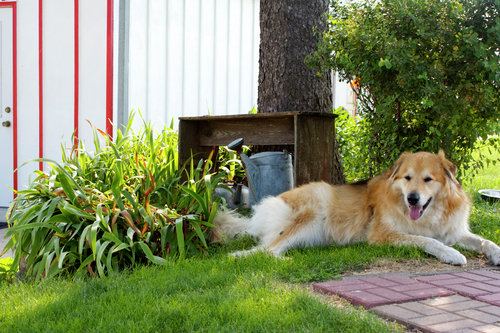
He had watched me do it a number of times over the past few days as I had recovered from road roar at the motel he managed, a quaint spot located a few feet from Lincoln Highway Memorial Bridge. The eaves of his motel echoed that of the nearby roadside park marking the historical location.
“No, in fact, I doubt most women even know what a bungee cord is, much less how to use one,” he replied.
My daughter during a phone call from Colorado had helped me make my shopping list: tarp, camel-back, spare tubes, pump, bungee cords, matches, insect and bear repellent.
I spent days bouncing back and forth from store to store in Chicago, driving home the lesson that I am not quite cut from the same fabric as most city girls. The city store shelves were lined with party goods, fingernail polish and bad shoes, not camping supplies.
I taught my children young how to pack for “roughing it,” heading into the “hills” of Colorado’s Fourteeners, dog, tent, bikes and sleeping bags in tow. We would spend most of our summers on tranquil lakeshores found alongside still mountain roads, joined occasionally by my husband when he would take the time away from the office on a Friday afternoon.
Within a few years, our outings included a shared pop-up tent a friend and his wife had purchased months before filing for divorce. With or without the added security of a locking screen door, I always felt safe as long as I had my golden retriever to alert me to intruders—even if a wagging tail accompanied her barks.
The memories remain as vivid as the scars, ranging from the time I tripped over an unseen boulder to the burn marks from dropping the marshmallow roasting stick onto my bare foot. Echoes of my children’s exultation as they sped down the mountain road for the first time, skipped their first stone across the surface of a lake, roasted the perfectly charred, black-skinned hot dog skip through my mind like a scratched, worn vinyl album.
The colors, sounds, textures of the memories are as vivid as the double rainbow we saw arching over Lake Dillon after a summer mountain rain shower.
Motherhood is at once the most rewarding and most despicable job in the world, and these memories remain the most haunting element of a life-time career of nurturing and shaping young lives.
I have my mother’s genes, and aging has come as slowly as empty nest syndrome, which had been interrupted by the discovery of an affair and ensuing divorce, further postponed by what had seemed to be a flourishing career and a promising relationship.
Sure, I missed my children when they left for college, crying over Dr. Seuss books, faded photos, scraps of old, worn “beakies” that lurked in obscure corners of shelves and drawers. But the empty house was not painfully quiet, but quietly reposeful.
Then it hit. The relationship ended as quickly as it had begun, the pink slip issued as effortlessly as the contract had been offered, and the house, once empty except for the memories, had been passed back to the ex and his new bride.
Yes, I had the excitement of being accepted into the second best art school in the nation (in the same city, ironically, where the new relationship had first blossomed), but no distraction, no museum, no cultural event, no amount of homework or volunteer work could silence the memories, and six consecutive months of hot flashes (with all the accompanying unmentionable symptoms) served as a hellish reminder that I am, at last, getting old.
Over the hill, and what was on the other side, unlike those times I had ventured into Colorado’s fourteeners, scared the hell out of me. So, I did what every healthy American does: I chose to ignore, postpone, procrastinate by heading into a mind-numbing, soul-wrenching, body-torturing mid-life crisis.
My legs were ready for it, but my fingers ache from wielding the bungee cords as I struggle to hold together my luggage while my frayed mind circles around far more quickly than the wheels on my bike in an attempt to silence the memories, run from age, clear out the empty nest.
Why did I embark on this trip? I’d hoped to stave off old age, and as a vestige of long lost youth is jostled back into the saddle, I reach one more time for what every city or country store always has in stock: yet another package of feminine napkins.
Empty nest, floundering career, no relationship…just one last push of my aging ovaries to remind me I am not quite as old as I thought. Irony at its best.
Lost Souls: “This Do in Remembrance…”
July 11, 2013
Tama, IA
“There is a white one right behind you, Rj. And a red and green one nearby.”
The hand-help apparatus, imitative of a submarine sonar “ping” throughout the previous hour, now blared its alert loudly. Each of us in the party of six had been equipped with some sort of detection device, including someone who had recently downloaded an app on his cell phone (the one now sounding its signal)—each featuring a different mode of discovery, including light, energy, sound, and, the cynic in me noted, chicanery, especially since the equipment was all readily available through e-bay.
The two Native Americans had spent a few hours providing details about their business. They had been hired by people across the region, conducting investigations that ranged from mere detection to exorcism, mentioning that a local business was visited by a Native American squaw who held an uncanny resemblance to the one painted in the 1950’s mural in the restaurant’s main dining area, explaining that the most frightening encounter had been a chief in full war regalia posted outside a nearby pioneer cemetery.
I had my camera, half in part to be a good sport, the other half hoping to make a nice light painting with my open shutter catching the glimmer of flashlights on one of the older granite tombstones.
I failed in my artistic pursuit, but seemed to have aided them in their preternatural one.
In addition to my camera, I had also been equipped with a hand-made shell necklace and fish bone (according to lore, the part of this type of fish that allowed them to communicate with one another) for protection.
One of the tools served a similar purpose as that of an Ouija board, allowing the ghosts to spell out words. “I-G-N-I-U-S,” at one point its bearer read aloud.
I added, “That is Latin root for fire.” It was within a few minutes after the reading and translation that the sonar started pinging wildly and my white sphere appeared.
Ghost hunting. Twice I had gone to Europe to do it, symbolically seeking the spirit of the fin de siècle expatriates, remnants of what Gertrude Stein had identified as “The Lost Generation.”
I can’t help but wryly wonder if I would have perhaps been more successful if I had made a few e-bay purchases prior to my trips.
As it was, my translation, as well as my presence, seemed to have stirred the ghost hunters’ equipment into action as we were approaching not an artist, author or historical figure, but a lone area in the cemetery containing a murder victim (whose throat was cut by his “best friend” after a night of partying in the 1980’s), and his later deceased parents.
The hunter couldn’t recall immediately what the colors of the orbs represented, but he promised to look them up later.
As we sat well into the early hours of the morning on the motel’s porch, half listening to the audio recording, half shooting the bull, the few of our party who remained suddenly exchanged glances, and the lead hunter pushed the rewind button. Somewhere between the spelled letters and my translation, “fire,” we heard a high-pitched scream.
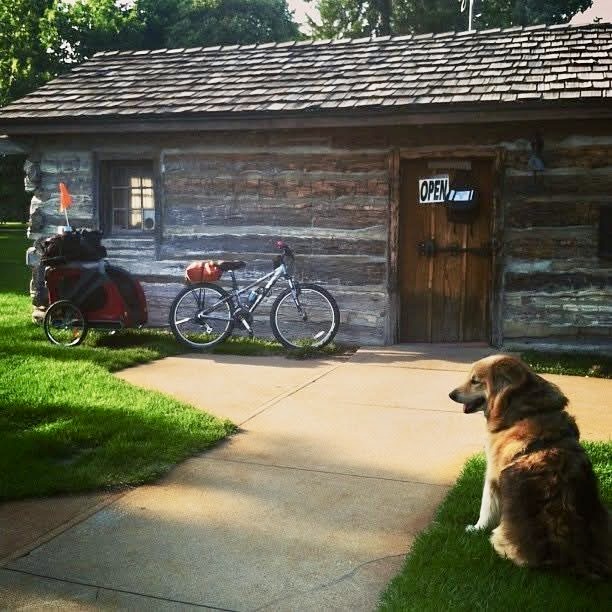
Coyotes or a passing train?
Perhaps, but we had not noticed it during the actual hunt itself, and it was a singular sound in the nearly two-hour-long recording.
Cynicism. My life has been wrought by it, and I couldn’t help but inwardly chuckle years earlier when I had been anointed and blessed before becoming a leader for a small group designed to aid young mothers. The pastor of the hosting church went from one woman to the next, applying the oil, laying on his hands, and identifying their spiritual gift. “Patience. Charity. Temperance. Tongues.” All the gifts were there.
He came to me, paused, applied the oil to my forehead, and hesitatingly reached toward the top of my head. He immediately shot back his hand, looked me square in the eye, and simply said, “Cynic.”
I don’t recall that being on the list of spiritual gifts listed in Second Peter.
“Faith can move mountains,” I had always been taught.
“Why, then, when I ask for something earnestly in prayer, are my prayers not answered,” I asked?
The response, “Because your faith is too weak.”
When I stood before my father’s casket, even though I was a young adult, I couldn’t believe God had taken my father. I had lost my stepfather just a few years earlier. Two losses in less than four years. As I stood before him, I inwardly screamed, “God, why? How could you do this to me—again?”
At that moment, the assurance of faith, the story of Lazarus, the denial and shock that always accompanies loss possessed my entire being.
After my mother remarried, I had seen little of my birth father, and once my stepfather died, I had just begun to work toward a renewed acquaintance with him, spending a few awkward hours here and there, sometimes just enjoying the feel of his warm hand as he took mine, standing silently beside a wooden table that was used on communion Sunday.
It was the most solid piece of oak I have yet encountered, impressed with simple egg and dart design featuring a bold, Gothic-style inscription, “This Do in Remembrance of Me.”
Beside his casket, I longed to once again feel the warmth of his touch, and in a moment of faith, I reached out, believing as I did that God would let me feel it at least once more.
I took his folded hand in mine.
Nothing but the cold, hard feel of dead flesh.
I walked away from the casket, tears streaming down my face.
The ghosts I seek most. I haven’t found them yet, in spite of the e-bay equipment declaring me to have been followed by those few in the old cemetery in Iowa. But as I lay on the grass each day awaiting the cool of the evening so my girl and I may continue our journey, wiling away the hours painting, blogging, editing photos, it is then when I feel most close to the creative spirit of the turn-of-the-century expatriates.
Lightening My Load: Sharing the Burden
July 27, 2013
Grand Island, NE
“Do you know how to change a flat?” he asked as he approached me, offering to air up my tire. I smiled, grimacing inwardly at the number of flats throughout my life I had, indeed, changed until I had converted my children’s bike tires to the solid ones. I also thought it ironic that my rescuer was more than likely even younger than my own children.
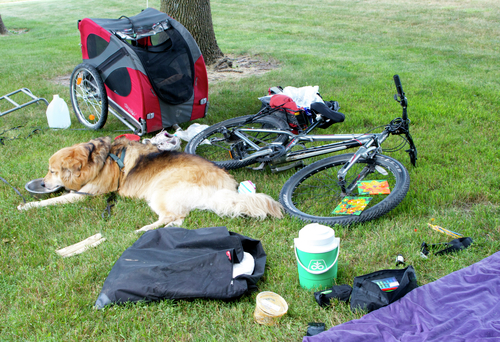
“Yes,” I responded, dryly, but thanking him heartily for his offer. “I believe this one has a slow leak, and the trailer tire is flat because the pump I just tried to use at the co-op a few miles back was set only for vehicles, which require about 35 psi,” I threw in for good measure, just to subtly let him know I also knew my way around automobile tires as well. “I was just heading to the next filling station to see if they perchance had an air pump that actually works.”
He whipped out a bike pump from his back pocket, and after about ten minutes of fidgeting with it because it was not set for my Schrader valve, his companion directed me to a bike shop only a few blocks away. She added, “We all took our bikes there for tune-ups since we are half way through our tour, but they were well staffed. I think they can help you replace your tube if it has a slow leak.”
I was half way through Iowa, and even though this was the first flat I had encountered (well, two flats if you include the one deflated by the pump that was incapable of even filling a beach ball), I knew my bike would benefit from a professional once-over anyway.
A state border crossing, several hundred miles and five tubes later, I resigned myself to the inevitable: solid tubes, at least on my girl’s trailer, especially since the last supercenter I hit was frighteningly low on the size of tube I needed. When I had asked the salesperson if they had more, he confidently responded, “Of course,” and directed me to the same empty end-cap I had encountered, explaining there must have been a run on the 20” tubes that normally fit children’s bicycles.
As I sped back to my tethered girl with the two solid tubes thrown over my shoulder like most women carry their purses, I acknowledged the inevitable: I was going to have to drastically lighten my load to compensate for the extra weight and loss of speed that accompanies solid tubes.
Typical of most travellers, I had over packed, a brutal realization the first few miles of my trip. Rather than sacrifice all the extras at once, I trailed them along behind me like the legendary Johnny Appleseed who scattered seeds across America during the pioneer days, leaving a trail of canned juice here, a case of bottled water there, with a large helping of canvases, tubes of paint, and pencils I had used to sketch the public art scattered across Chicago.
In spite of my deep aversion to littering, unlike my worn tennis shoes, I didn’t have the heart to place the still useable items into the trash, leaving them balanced along side the can just in case someone happened to notice them and put them to good use.
Following my up-endedness in the Iowa cornfield after a rainstorm, I had readjusted my load, placing what remained of my art supplies in a canvas bag under the luggage rack on my girl’s trailer. I knew I faced an additional obstacle after the pushing and squeezing that inevitably comes with replacing air tubes with solid ones: my luggage rack, weighed down by my duffle and jostled across the miles, had become jarred onto the trailer so firmly I was unable to remove it myself.
“Aren’t you forgetting something?” my advisor asked, after a cursory glance at my resume.
“No, I don’t believe so,” I responded, looking at it again. It was all there: my teaching experience, my education, my skills.
“Where do you mention you are an artist?” she asked.
After years of teaching, I had forgotten why I loved art in the first place: I loved the process of creating. Somehow in my excitement to teach others how to create, I had neglected my own art practice.
My first sketches as a young child had been derived from the same collection of fairy tales my brother and I had read before my parents divorced; women wearing flowing, pointed headpieces that melded into their medieval gowns; winged fairies and goblins in contrasting bright and dark tints; flowers and fauna unrecognizable to an Audubon illustrator: the stuff of flights of fancy and fantasy, imitating the style long before it became a recognized and lucrative art form.
And nearly every piece of paper in my school notebooks had been lined with them, sketches trailing across the margins of every assignment I handed in to my teachers.
“You’ve got to understand, I can’t cook,” I reveal to almost everyone after the first few casual conversations. “If that is a deal breaker, you need to know,” I add hesitatingly.
When I was pre-pubescent, my mother enrolled me in a cooking class. As a fifth grader, by the end of the class, I knew I was an abysmal failure in the kitchen. My hard-ball candy stuck to the confectioner’s paper like a lifeless blob; my chicken was blackened on the outside, pink in the center; my cake had fallen.
At the end of the six-week period, we were asked to make posters using ingredients we had used throughout the class. At last, an assignment I wouldn’t struggle to fulfill.
The last day, as the awards were being handed out, I had slipped into a daydream, a problem every progress report had noted throughout my school years. A sharp jab from the elbow of the girl sitting beside me abruptly returned me to the present.
“Jeannie, they just called your name,” she angrily whispered.
I walked to the front of the room and bewilderedly accepted the two-cup glass Pyrex measuring cup, the one item I have carried with every move I have ever made. Except my last one.
“No, Jeannie, you can’t take that box,” she said, glancing at my art supplies and notebooks. I wasn’t allowed to cry, a lesson we learned quickly and painfully at the other end of a belt.
I turned my back and walked away, knowing we could never afford to replace the supplies, knowing that my friends and I had spent hours—and several ink pens—scrawling our names and “Best friends forever” in a number of different styles of calligraphy, the type of treasures every middle school girl collects.
Recalling the young eyes that had cautiously peered at me from behind their SUV when I first tethered my girl to the stop sign a few miles outside of Grand Island, I understood my solution: the young man who had received the explanation of my plight was stronger and taller than I, so he more than likely could tackle the task of disengaging my luggage rack, and I would offer the then offer the freed art supplies to the children.
The young girl smiled broadly as she held open the bag, its contents spilled across the grass. As I began sorting art supplies from my pillow and bike tools, placing two boxes of pastels, several tubes of paint, a dozen canvas boards, a bag of paintbrushes, two packs of card stock and another bag of charcoals and watercolor pencils into the increasingly heavy canvas bag, she observed, “Yes, this will lighten your load, won’t it?”
After I had changed my tires, untethered my girl and coaxed her back into the trailer, and felt the sting for the first time on the trip as my leg muscles strained to adjust to the weight of the solid tubes, my load had, indeed, lightened.
Tears streamed down my face as I rode away; not tears of loss, but those that come with the remembrance of a child’s bright eyes that accompany a smile.
Welding Together the Broken Pieces
July 27, 2013
Grand Island, NE
Glancing over my shoulder, he winced and noted, “Not much scares you anymore, does it?”
I had crested yet another hill, and as we stood talking with one another while I balance my bike with one foot on the curb lining the main thoroughfare in Carroll, IA, a semi passed beside us.
“No, not really. Not at this point,” I replied. My girl, sleeping inside the trailer, likewise, seemed to be oblivious to the traffic. By this point, she had taken to complaining only when we reached upward to 50 m.p.h. on the longer downhill ascents.
By the time I had reached Chapman, NE, she had been spared those hills now for several long but quick miles, and it seemed as though while we were consistently increasing our altitude, the road itself appeared to be relatively flat.
The worst of the trip was behind us.
“You passed our construction site near Vail (IA). You gotta lotta guts, girl,” he said when we met again at the convenience store a few miles further up the road.
“As a woman, aren’t you afraid to ride alone?” another man asked when my girl had stubbornly insisted upon sitting on his feet while he rested near his own touring bike at a park in Clinton, IA.
I often met with these types of questions and observations, responding, “Following the recent Trevor Martin case, with my dark tan I am perhaps safer than a male would be.”
“Did he really just to that?” she exclaimed.
As I sat visiting with the cashier outside the convenience story in Chapman, for the first time on my trip, I was afraid because I was a woman.
He had sped into the parking lot and quickly pulled into a space in front of the store, but after catching sight of us sitting on the curb at the side of the building, he threw his pickup into reverse, squealed his tires, spun around into the gravel road leading to the side of the building, ran over a parking barrier, and screeched to a halt right in front of us.
He jumped out of his cab, and as his bare feet hit the ground, he stumbled.
“Where you headed?” was quickly followed by, “Where do you sleep at night?”
The town I was in had one main road in, one main road out, and it was already dark.
I had nine miles before I hit my destination, Grand Island.
After evading the first question and explaining I usually camp, he noted with a drunken slur, “Hell, girl, you just missed the campground,” adding suggestively, “but my girlfriend and I wouldn’t mind taking you there, if you know what I mean.”
I politely declined.
The cashier had said little once he had jumped out of his car, and after his comment, she quietly got off the curb and walked into the convenience store. He followed, informing her he needed another pack of cigarettes with the authoritative voice a “regular” assumes at a convenience store.
After he left the graveled section of the lot with his purchase, throwing up a cloud of dirt, she quickly came back out, told me where she lived, and added, “My fiancé is going to pick you up and take you there. You don’t need to be on the road with him around, and you sure as hell won’t be safe at any of the campgrounds.”
A few minutes later when her fiancé arrived, for the first (and last) time on my trip, I accepted a ride to the next town.
“I was in the Army until I was dishonorably discharged after two-and-a-half years,” he informed me on our way to their house.
“You saw action, then?” I asked.
“Nope. I had spent several years looking for my father when I received the letter from his life insurance,” he responded as my tears welled up immediately.
“I am so sorry,” I quickly added.
“This one had a body from one year with a hood from another model,” he explained.
As we sat on his front porch waiting for her shift to end, he showed me pictures of all the vehicles he had rebuilt.
“Where did you get the pieces?” I asked.
“I find them in the junk yard,” he responded.
“Where did you learn to weld?” I asked.
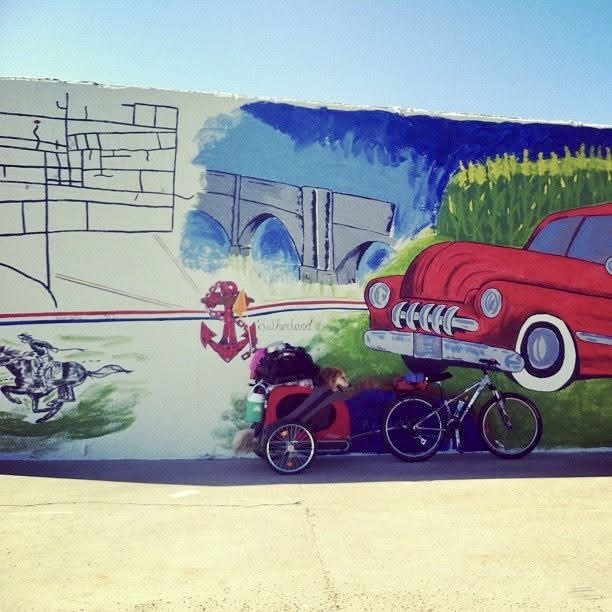
“Kinda like everything else in my life. I taught myself,” he told me, adding that shortly after his father died, his mother and a brother did as well. “A few families took me in for awhile. But I moved often as a kid, and now I can’t seem to stay in a single place for long.”
Our conversation had come in bits and pieces, frequently interrupted by interjections from their children who had been introduced as “hers” and “mine.” I asked, “Are there any ‘ours’ yet?”
“No, we have enough to make a family combined together,” he said.
After a few more interruptions, I asked, “Why do we wander? Why do we find it so easy to walk away from everything rather than stay and fight for what we really want?”
I had explained that I, too, had moved often as an adolescent and had also lost parents at a young age.
As the phrase “Train Up a Child” mingled with “We can’t take,” echoing loudly through my head, he paused, unable to answer, the same empty response I have when I ask myself the same puzzling question.
After a few moments, as angry tears streamed down my face, I was finally able to answer my own question: “I guess it is easier to walk away than to have someone take it from you.”
“Every relationship has baggage,” he stated one day as we sat watching the sunrise while overlooking the lake. In a world of broken pieces, broken marriages, broken lives, the statement seemed cliché.
While I waited patiently for my stubborn girl to ease her old, scarred, arthritic, formerly abused and now misshapen body into the trailer yet one more time on my journey, I couldn’t help but think, “It isn’t a matter of how much baggage one has going into the relationship, but how well those in the relationship are willing to help one another carry their combined load, and how creatively they are able to piece together the brokenness to create something new.”
Taking Risks: Satisfying My Customers
July 30, 2013
Kearney, NE
“So you’re the one the restaurant is named after,” I noted as he beamed, smiling at me. He was proud to be part of the business, had looked forward to helping his father once he was old enough to do so. His passion and excitement was evident in the way he greeted his customers.
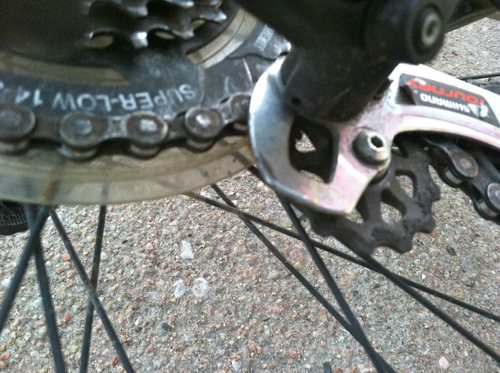
“Yep,” he simply replied, adding that he will miss working there when he leaves for college.
“Naming the business after your sons?” I questioned. Too often they are named after the founder, and the children are expected to follow in the footsteps of their father or grandfather. “It is a nice way of making sure the business stays in the family, isn’t it?” I jokingly added as his father handed him a basket of ribs for the customer standing beside me.
“It is a home-grown program,” she explained as she took the bag of BBQ through the drive-up window. “Several of our faculty members are from here. They earned their undergrad degrees here, and earned their graduate degrees nearby.”
Each educational institution seems to adapt their own programs to their own regions, primarily addressing issues that seem most pertinent to them: urban race, horse-training management, museum curatorship, rural education. Do these emphases, though, at times become blinding, or do they serve the same purpose as the blinders a horse wears while pulling a heavy load?
Educators, when presented with obstacles—whether administrative policies that seemingly contradict their own pedagogical practices or daily encounters with challenging students within their individual classrooms—must be like artists, willing to take risks, try new approaches. Go the extra mile, if you will, to reach their final destination.
Yet often, we are resistant to new procedures, new theories, new ways of presenting old material.
How often do we take the same approach the Disney character did when he declared, “If it ain’t Baroque, don’t fix it?”
And how do we define brokenness within education? Is it low scores on standardized tests, high drop-out rate, low employment rate after graduation?
If these are the standards whereby we measure our success as educators, how, then, do we address the brokenness?
Often, blame is placed upon the students.
“Students don’t seem to be as motivated as they used to be.”
“Students aren’t as respectful as they used to be.”
“Students don’t seem to care any more.”
“Students come in unprepared. They don’t even bother to read the assigned material.”
Or blame is place upon parents, administration or society.
“Students come into the classroom too tired, too sick, too hungry to learn.”
“Parents need to be more involved in their children’s education.”
“Classrooms are too crowded.”
“Budgets aren’t big enough to provide the materials the students need to learn.”
Perhaps because I am an educator, I rarely hear blame placed upon the educators themselves, those same educators who have taught the same subjects year after year, approaching the material exactly the same way they did ten years ago, approaching the material the same way their own mentors had done.
“Do we want to discuss the material, or shall we begin with the little PowerPoint I have prepared?” he asked as he turned his back on us while walking toward the computer to show art students a few sentences he had thrown onto slides that were bereft even of color or animation. We knew we had no real choice, in spite of his rhetorical nod advocating a democratic classroom.
“What do you think of the essays on Social Justice?” he asked, but immediately bristled when I pointed out all the assigned readings had been published over ten years earlier.
“I don’t want to be the only instructor in class,” she informed us on the first day, adding, “You will each be responsible in presenting the material.” Yet at the end of each class period, when only a few minutes were left after she had spend nearly all of the allotted time presenting her own material, she would glance at the clock and say, “We have only a few minutes left…,” having thoroughly presented the same material we had ourselves prepared for discuss.
He had assigned Derrida’s seminal essay, “University without Condition,” yet openly took jabs at Russian culture with as sideways glance toward the Russian student who later withdrew from the course, was highly critical of corporate sponsorship of academic research, and freely admitted to me during office hours, “I don’t think veterans have any business being in college.”
“Sorry about the miscommunication,” the email read. “We usually don’t meet the first week of class,” even though the syllabus clearly stated that since it was an independent study course, if we missed a single scheduled class, we were at risk of failing. “Sorry, I am not going to be able to meet with you today because of the weather,” he said after I had already taken a train into town. “I am sorry, I guess you didn’t get the email I sent saying class was cancelled,” he later told me after I had noted I had waited in an empty classroom for over an hour. “Sorry, usually I schedule the last class before thesis symposium so you can go over your material before you have to present it,” he explained the last week of class.
“Do you feel as though you got what you paid for?” he asked.
Sometimes, lessons are learned only by listening carefully to voices that surround us. Sometimes, lessons are learned by reading the assigned material and doing the assigned tasks. Sometimes, though, the best lessons are learned by example.
I can only hope my customers, my students, are inspired by the way I greet them, the way I passionately approach my material, and the way I meet their individual needs. Only then will I be able to say, “Yes, I got what I paid for,” confidently adding, “And so have they.”
Making Plans: Pushing Through Obstacles
August 4, 2013
Lowry, CO
“When did you first start to plan your trip?” she asked as we sat around the table eating take-out Chinese.
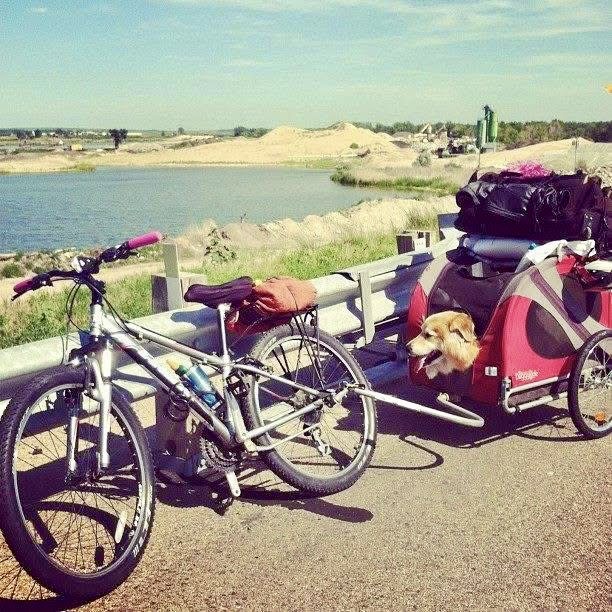
My daughter and my niece had planned a steak dinner for me to celebrate my arrival, but because of the rust that had accumulated on the tow bar somewhere between the Iowa cornfield and the Colorado border, it had taken several more hours than we had planned to load my girl, trailer, duffle and bike into her compact Honda.
I hesitated a moment, as I always did when faced with the question. “I wanted to make it last year, but my plans were aborted by overwrought family members,” I replied.
Truth was, I didn’t really plan the trip. Like nearly everything else in my life, it just happened.
“What is your five year plan?” he asked when we first met.
“I can honestly say throughout my life I have learned not to set goals. Life is always in flux,” I responded. “I do know that when I retire, I would love to hike across Italy and England, following in the footsteps of the American expatriates and English Romantic authors.”
He laughed, adding, “That will suffice. At least you have a 20 year plan!”
The following summer, one day after sharing our breakfast watching sunrise over the lake, I submitted my application to the Institute.
By the time I arrived, he was married to someone else.
I have, indeed, learned not to make plans. And as it turns out, I have landed in a much different spot than I would have ever foreseen.
As an adolescent, my plan had been to graduate from high school with the skills of a receptionist, apply for a desk job at Boeing, and spend the remainder of my life contentedly living a boring existence in Seattle, WA. College, I believed, was for rich white kids.
“Would Roberta Revia please come to the office?” I heard over the high school’s intercom.
At that moment, I knew he had died.
My mother had rushed him to the hospital on a Sunday evening, dropping me at my best friend’s house on her way there. The following day as I stood beside his hospital bed listening to the blip of his heart monitor, he seized up in pain, clutching his stomach.
He had been diagnosed with an aneurism in his stomach, an easy enough problem to address with a relatively simple, low-risk procedure. But because of his high blood pressure, they had put off surgery.
I glanced over my shoulder on the way to rush toward the nurses’ station, catching the last glimpse I had of my stepfather other than a few minutes later when the same nurses I had bumped into on my way out of the room rushed past the waiting room with him on a gurney.
“I don’t want you to go back into his room,” my mother told me a few days later. “He smells of death.”
He had been in surgery for hours, and she had arranged for me to be taken back to my friend’s house where I stayed for days, only receiving updates from her as we talked in the evenings on the phone.
After surgery, he had been placed in ICU, attached to a kidney dialysis machine, an artificial lung and a feeding tube, and she described the only sound in the room as the blip of the monitors and the hiss of the machines.
The sound of prolonged death.
She also described how the black that had appeared on his toes a few weeks before we had rushed him to the hospital had spread up his leg and began creeping into his fingers and arms as well.
She often didn’t allow us to watch television, so my brother and I were frequently banned to our rooms where we read instead. The exceptions were his sacrosanct M.A.S.H. and Star Trek.
“I am tired of waiting for death, Jeannie, and he would have wanted us to see the movie,” she explained as we stood in line for the tickets. He had been on life support for three weeks. “We need to get on with our lives,” she added with exhausted resignation in her voice.
I don’t recall anything of the movie past what the critics had identified as the too-long, lingering shot of the Enterprise.
The following day, I returned to school for the first time since we had rushed him to the hospital.
I had hours of make-up typing practice sets to do, so I stayed after school. I barely heard the announcement over the clacking of the I.B.M. Selectric.
I knew. I didn’t go by my first name, and I never shared my stepfather’s.
“Sit down,” my mother told me as I came into the small apartment we shared while we both attended Bible College.
Again, I knew.
Although I had enrolled as a missionary student, a few years into school I switched majors, knowing that my original choice would never yield a job since missionaries weren’t allowed to enter the field single.
Out of frustration, I returned to my high school goal: a desk job as an office assistant.
My speed as a typist was never as high as my peers since I struggled with tears nearly every time I typed, but I excelled at shorthand. I loved it for its artistry.
The fast, swirling reduction of sound into figurative representation fascinated me, and transcribing it reminded me of decoding, interpreting, revealing a hidden symbol.
Communication. Calligraphy. Art.
We had spent a wonderful holiday with the family, enjoying for the first time ever a relaxed Christmas dinner with as many of my siblings as possible. My mother, father and his wife are all part of the photos, and they are the only ones in existence that celebrate the confused tangle of “mine,” “yours,” and “ours” that our family had become.
For a brief evening, all the abuse, anger, frustration and bitterness had been set aside.
A few days later, I had gone to the business school lab to practice dictation.
My father had died of a massive heart attack in the grocery store while buying light bulbs. He had spent the morning across the street from our church, chopping wood for an invalid and his mother.
Planning had always, thereafter, been as spontaneous as death. Or childbirth.
“Push Mrs. Davis, Push!”
Any time I encountered an obstacle—physical, emotional or intellectual—my ex would playfully repeat the same phrase I had heard while giving birth to our first unplanned child.
“I have plans for most of July,” she informed me when I first passed the idea of the trip by her a few weeks before launching, “and I think I am busy most of August as well.”I am proud of her accomplishments. She had a job before graduating from college and has been employed consistently thereafter.
Like me, she had worked hard for our trip to Europe, paying for it herself by juggling three part-time jobs the summer before we left, then earning enough for spending money throughout her senior year, the same year her parents divorced.
She loved Sex and the City, idolized the fast, consumer-driven lifestyle of the New York friends. And she had determined to return from Europe with a pair of Gucci.
While the remainder of her classmates spent their money on the same brands they could have purchased at a Colorado mall, she waited patiently, determined to slip into the shops from which our tour guide had consistently steered us away.
The opportunity arose, and she left Europe having attained her goal: an adorable pink pair of sandals that sported a bee, her nickname. It was a custom pair, the only one in the store we had stumbled upon while in Florence. Unique. Beautiful. Playful. Just like her.
“If you can reach the Colorado border by next weekend, I can pick you up. But I don’t know when else I can do it since I have plans again for the following weekend,” she explained.
“But I doubt you can cover most of Nebraska in a week,” she added.
While I usually don’t make plans, she is aware that I do step up to a challenge.
“The solid tubes have slowed me down a bit,” I told my brother after he reminded me that I still had over 2000 miles in altitude to gain before reaching my destination.
“It is all uphill from here,” he wrote, adding a string of cycling clichés.
“Ride, ride like the wind.”
“Ride like you mean it.”
“Ride to punish your bicycle that you have grown to hate.”
“Ride for revenge.”
“Ride to annoy your nay sayers.”
“Ride with total abandon.”
“Ride because your invisible friends are chasing you.”
“Jeannie, you’ve got to get back on,” he said as I clutched my leg, horrified, as blood ran down it, staining my socks, dripping onto the pavement.
“I can’t, daddy! It hurts too much!”
“If you don’t get back on now, you never will,” he insisted.
I reached down to pick the big black piece of asphalt from the wound. “No, leave it. We can clean it when we get home. If you touch it now, it will get stuck. The blood will help wash the wound.”
I grabbed the bumper of the parked car I had just ran into, eased myself off the ground, and angrily got back onto my bike while my brother stood behind me, laughing.
My dad had bought us bikes a few weeks after the divorce, and I had stubbornly, fearfully not allowed him to take off the training wheels for almost a year.
Mom, I am going for a bike ride,” my brother would yell.
“Take your sister with you,” she would always shout back at him as we left the house. As I tagged along behind my brother, he would often complain because the training wheels slowed me down and limited the paths we could take.
But that particular Saturday, after pulling out my first tooth that had dangled in my mouth for weeks, I was ready to conquer the world.
I had always enjoyed helping my dad—an avid do-it-yourselfer—with his projects.
After I had watched him take off the training wheels, handing him the wrench and the pliers, responding to his request for tools with the same promptness a nurse responds to a doctor’s request in an operating room, my confidence grew as he ran along behind me, holding onto the back of my banana seat to balance me as I pedaled up the nearby hill, explaining that the speed I would get while going downhill would hold me up.
Not fully understanding the laws of physics, I believed him.
As I gained speed, though, he was right, and I was exhilarated by the final push he gave me as he let go of my seat.
My brother, riding slightly behind me, shouted, “You are doing it!” and I looked back at him, smiling with my toothless grin.
Next thing I knew, I was on the ground behind the parked car, nursing my bloodied leg while my brother laughed.
“I feel a part of your success since I taught you how to ride a bike,” he texted me a few days ago.
More than that, he and my father both taught me how to get back up after I hit the ground, and at the same time taught me how to laugh at my own mistakes.
My father was right. Wounds heal. By the time we reached home, as I took off my sock, I found the pieces of black asphalt mingled in the cleansing blood.
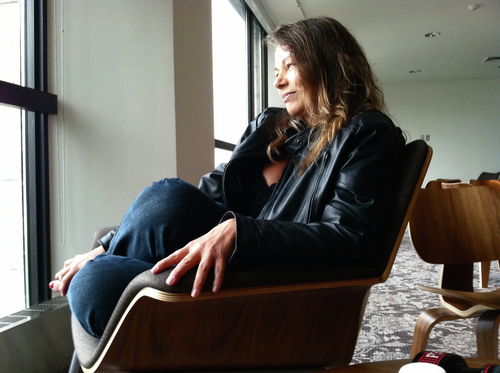
Gathering Rosebuds: A Backward Glance
September 4, 2013
Denver, Colorado
Is art making, in whatever form, merely leisure?
For me, even though I have made a career of teaching art—whether writing or visual, critiquing or producing—I have yet to approach my own artistic practice with serious dedication.
I took my first few faltering steps toward formal higher education entering the college classroom as an under-confident, non-traditional, full-time mother who had just recovered from an emotional, spiritual and intellectual crash.
I had been pregnant and or nursing for five straight years, and the hormones had taken a toll on me, rendering me to a non-verbal state from which I slowly emerged with the aid of medication, exercise, and therapy, an intensive program that included close analysis through journaling my reaction to works by noted theorists ranging from Freud to Maslow to Schopenhauer to Hegel.
It isn’t surprising, then, that for me the best form of therapy ultimately came not from any of the aforementioned treatments, but through education.
Even before entering my first literature class, my therapist had trained me well for my profession as literature, theory and art critic.
What I wasn’t expecting, though, as I entered the classroom, was the day in which I confronted myself on the other side of my career facing the same dilemma that challenged one of the literary characters I had encountered in my first literature class. I have been forced to take a backward glance at what once was my career.
My dearest professor, mentor, and later friend, himself at the time nearing the age of Arthur Miller’s protagonist, assigned his class Death of a Salesman. The tragic hero is not an aristocrat as Aristotle dictates, but a commoner, as reflected by his name Loman. He has lived his life comfortably, his children are grown, and he is now faced with the crisis of being fired from his life-long career by a younger man, Howard Wagner, who just happens to have been given his name by Willy Loman, a subtle indication that Loman once had held a position of not just secure employment but also friendship with the former corporation owner, Wagner senior, who is now deceased.
The tale is tragic, yet true. Especially in America, the younger generation quickly supplants the older one, often forcing the aging population into early retirement.
Yet it is the natural cycle of life. After all, we train our young children in the ways we believe they need to go, equipping them with tools to live a life better than what we ourselves have lived, never quite taking into consideration that as we do we are training what will eventually be our own competitors in the job market.
As campuses across America are filled with freshman who have only known the digital age, the process seems particularly logical, especially since all too often among peers my own age I hear them freely admit they haven’t the least bit interest in establishing or maintaining a presence on the social media scene and disparage those who do.
As we face our self-trained competitors, how do we react? Criticism in a number of forms seems to be all too common.
“Kids these days are so fucking disrespectful,” one senior noted as he pushed his way through the door ahead of an older woman sporting her way down the hall with a walker in tow.
“Most of the young people today have no work ethic,” she said from her chair as she handed me her plate, unaware that I was only a few years younger than she was, adding disdainfully, “They are lazy,” even though she had been served dinner by a twenty-something volunteer who not only had served her food but would later stay an extra hour after lunch to clean up the trail of food she had left on the table and floor.
“The latest training module I attended indicated age discrimination begins as early as 40,” she informed me when I told her I am struggling to find a job.
“You look young for your age,” my daughter told me, believing that it shouldn’t matter that I am “over the hill.” She added, “You could easily pass for a woman in her thirties.”
Whether or not this is true, each time I am asked to include my birthdate on an application (“That isn’t legal,” my daughter noted), I know I am at risk of having my resume placed at the bottom of the pile—or, more than likely, deleted with a quick, sharp, distinctive click of a computer key.
Recreating oneself is not just a dilemma facing the aged or aging, but every human being who, for whatever reason, is confronted with the necessity of redirecting his or her life, whether it be the result of a failing relationship, a shift in health, unemployment or underemployment—or even just the inherent dissatisfaction with who or what one has become.
While criticism of the situation may be the first reaction, the choice of how one reacts to the obstacles one encounters always remains with the person encountering them. As for me, I have spent my career training up the next generation, and I love watching my former students’ individual successes.
I may be “over the hill,” but as I have learned on my journey, the quick descent that comes following the summit may be remarkably invigorating, and the speed is heady. As college classrooms fill this fall with children of the digital age, I know, for my part at least, I have the leisure to create whomever or whatever I will now become.
Tennis Shoe Diaries

Overcoming Obstacles
June 24, 2013
Chicago, IL
Saying goodbye is never easy. I have a tradition of once I have walked holes in my tennis shoes, I leave them behind at my favorite place to commemorate the miles over which I have plodded. Santa Fe, Rome twice, Boulder, and now Chicago. It is my way of honoring the places I have trod where people have shaped history… kings, priests, popes, servants, slaves.
This pair had served me well, but lasted only as long as it took for me to earn my degree at the School at the Art Institute in Chicago where I had walked hundreds of miles from one work of public art to another and back again while collecting the data to complete my Master’s Thesis.
This pair had started in Boulder, pedaling me up McCaslin Road from the city where throughout the years I had given birth to my three children, strolled hours along the Boulder Creek Path, kissed my first love, watched sunrises gloriously paint the Flatirons while shuffling through French or Latin verbs with my two dearest friends.
When I first saw those dull, grey, distinctively erect maidens enshrouded in mist, rising out of the green carpet surrounding them, I felt as though I had come home. My last glimpse of them over my shoulder after I had conquered the hill that even the older model cars my ex husband and I drove while he attended law school struggled to climb remains as equally memorable.

After teaching art and literature for nine years in a dusty town in the middle of nowhere (yet oddly on the edge of paradise), my position had been eliminated because of budget cutbacks. Art and literature: always the first to go.
I had moved to my dusty city on the plains, calling it home for 20 years, raising my children, volunteering, teaching, editing, and even pushing carts for a few months at the local Wal Mart during my divorce to earn enough money to go with my daughter and her classmates to Europe, her first trip, my second. CSM was my official title, Customer Service Manager. Newspaper Graphic Artist by day, College Instructor by evening, Customer Service Manager by night. Three jobs, not much different than my mother following her divorce.
My favorite part of my night job had always been pulling the train of shopping carts throughout the store to deliver newly arrived merchandise. Reminded me of the shopping cart antics my brother and I had when we were children, running amok after our parents’ divorce.
And yes, when my son’s best friend (accompanied by my too-pale, fearful children) came through the line at Wal Mart with singed eyebrows and bloodshot eyes from an attempt to light the grill with gasoline, I knew they, too, had run slightly amok.
Every time I would set out with my blue vest and title-bearing nametag with the train of ten or twenty carts attached together with the child safety belts, I myself was a child again, recalling the rattle and rumble of the races not against each other but against time as we pushed one another, reaching speeds faster than Superman, tipping, tumbling, laughing at the newest stream of blood dripping down my skinned legs, knowing it would add yet another scar on my too-skinny shins…and not caring as I jumped excitedly back into the cart, ready for another round. The shopping carts then didn’t have safety belts, attorneys didn’t have high-stake torts claims, and our mother was too busy working three jobs as a single mother to try to make ends meet during the recession brought about by the first energy crisis.
Oh, kids, don’t try this at home…
My first trip to Europe had been in part a result of those wrestling matches with French verbs, as I embarked on my Honor’s Thesis study trip that took my ex husband and I trudging endlessly through the streets of Paris, Ravenna, Florence and Rome in search of the art world of Henry James, chasing ghosts of fictional expatriates living in European luxury their meager nineteenth fortunes would have never afforded them in America. Louvre, Notre Dame, Uffizi, Il Duomo, St. Apollinaire, Capitoline, St. Peter.
And we found them, the Master’s ghosts, all at once lying beside a single prostrate figure on a chaise in perfect Victorian symbolic subtlety, located in a fifteenth-century map room adjacent to the sixteenth century woman staring blankly into space bearing a pendant proclaiming the nature of true love while absentmindedly holding a prayer book threatening, at any moment, slip through her fingers.
That was when the tradition began. I had arrived in Paris wearing a hideously bright yellow fleece jacket with a buffalo stitched above my left breast, about where my fingertips would touch if I were to be saying the pledge of allegiance to the flag of the United States of America (no wonder I had been poorly received by the austere guards at Galleria Borghese). And I was wearing a new pair of very white tennis shoes, ones broken in enough to be comfortable, just like the guidebooks had instructed. We had walked the bridges, the cathedrals, the chapels, the museums, the cemeteries, the monasteries, the train stations (catching our train to Florence in romance-novel fashion, jumping onto the departing platform after a quick dash to snap a last-minute shot of the tunnel where Princes Di was killed…a gift for a friend who would later serve as my high school teaching mentor).
After the hills, the quays, the monuments, the gravestones, the milestones, the fountains, the sculptures, the canvases and the triumphal arches, at the end of my journey when I saw the mile-marked tennis shoes alongside the 18 rolls of film, I couldn’t quite bring myself to throw away the dust of the sacred ground I had traversed. I took them out of the bag, gently setting them into the hotel’s trashcan, an act I equated to throwing a coin in Trevi Fountain, a gesture guaranteeing I would someday return.
Of Solitude and Beauty
June 28, 2013
Itasca, IL
And I did return. With my daughter, 40 high school students and ten sponsors in tow. Although the trip’s official description included extensive study of European art, culture and language, most students were there for one reason: legal alcohol consumption, and when we emerged from Parisian Metro tunnel our first day in Pigalle, while the girls were attracted by the “high fashion” surrounding them, most boys were oblivious to the “wares” being offered, intent only in finding the well-known Les Deux Moulins to toast their newfound freedom.
By the end of the day, another sponsor and I had worn our way through the sandals we wore.
Because they had not been thoroughly conditioned, my tennis shoes, for that day only, remained in my bag. After walking through the decadence of Pigalle, climbing the hills and halls of Sacré-Cœur, wondering at the stained glass of Notre Dame, browsing the bookstands along the quay, and rushing through the local markets, she and I declined the opportunity to take the elevator up the Eiffel Tower, choosing instead to walk the streets of Paris without our other 38 companions. We explored Saint-Germain, searching for the souls of Hemingway and Fitzgerald, Sartre and de Beauvoir. I believe we would have caught a glimpse of them at Les Deux Magots if it hadn’t been for the crowds of tourists rattling their Armani and Rykiel bags like Scrooge’s ghost of Christmas past.

One pair down. Lighter suitcase. More room for my prints, wine and gargoyles I had begun collecting.
Since the search for history’s lost souls in Paris had been fruitless (though I believe I caught a glimpse of the 14-year-old Marie Antoinette in the pout of one of our younger students who had grown weary of Parisian art and culture by the time we descended the marble staircase of Versailles), I extended the invitation to the same-cosponsor to spend a night searching the beaches of Antibes. She politely, albeit succinctly, declined.
I darted in and out of the clubs and cafes that night, choosing to return to our hotel along the beach, hoping to at least find a lost pearl from Sara Murphy’s long strands or a wine bottle discarded by Picasso, pausing long enough to sketch my first attempt at art for the first time since becoming an art teacher at a small community college. Nothing.
No ghosts, even as I spent hours strolling the Promenade des Anglais searching traces of Chagall and Matisse in Nice, explored the hillside near Eze searching for the herbs and fauna Marie Antoinette chose to create her own perfume, or Monte Carlo listening for echoes of Puccini near Garnier’s Opera House, though I did make a photo of a bird of paradise while listening to strains of 007 movie themes at la Jardin botanique that I would later integrate into a series of canvas based loosely upon abstract birds.
Since I had failed to evoke even one glimpse of eighteenth century French aristocrats or nineteenth to twentieth century American expatriates, while at Pisa I had hoped to channel the Pisano brothers, only to hear taunting echoes in the drip of the Baptistery waters. And at Assisi I had hoped to assimilate Giotto’s angular yet softly human figures in my own work, though I believe I saw a glint of the saint in the tears one young man shed while kneeling in front of the reliquary as he honored the request of his recently deceased grandmother to light a candle and say a prayer for her.
By Florence, I had walked myself quite thoroughly into a deep, soul-wrenching cough, worsened, I am sure, by the waves I had baptized myself in those few nights earlier along the beaches of Antibes. My daughter and I missed the side-trip our other companions took to the frescoes of Sienna, losing ourselves in the streets of Florence instead, eating lunch at the foot of the imitation of David; discovering blown glass, hand-stitched journals, and finely woven tapestry in the market stalls; and stumbling upon the Fontana del Porcellino. We believed we had seen a shadow of Alberti scampering along the embracing scaffolding among the historical preservationists working diligently on the Santa Maria Novella, but the sound of the chisels, hammers and saws drowned out any lessons in perspective I may have received from him.
While my cough may not have improved in the mists of the Arno, my own tour-weary soul had been revived by the solitude and beauty my daughter and I were able to bask in, and she was quite proud of her new pink pair of Gucci’s.
By the time we descended on Rome, after climbing the steep Spanish Steps seeking Keat’s companionship; tossing our obligatory coins in the Tivoli while making our wishes; trodding the steps of popes, artists and saints in the Vatican; and chasing the chariots of gladiators through the Coliseum, I had failed to encounter many ghosts. But my tennis shoes smelled like something had died in them.
My parting act: leaving them beside my bed in the quaint inn in the Palatine hills.
Montezuma’s Revenge:
Opening the Door for a Quiet Weekend Getaway
July 2, 2013
Dixon, IL
“Errmmm, Roberta, it’s time,” she sheepishly intoned from the seat beside me.
It had been time, and time again…and again.
Sandwiched between the two European treks, I happened upon a very quick dash to Taos, landing in Santa Fe with a soft thud, a beautiful whirlwind of a trip with, well, a wind from Boulder. Boulder Creek, to be precise.

My stunning sojourner had spent a few days working on her creek-side canvas while sipping her usual companion, a Mountain Dew, when someone else’s companion, a wet golden retriever bounded past, splashing creek water all over her oils, her even wetter canvas, and, as it turns out, the straw from which she had been sipping.
After her string of sailor-inspired shouts, she continued mumbling, dabbing her canvas, wiping her tubes, following her careful cleaning with a sip from the still dripping straw.
“I am not feeling quite up to par,” she informed me when I picked her up a few weeks later, adding, “There is no way I am squeezing this swollen belly into my bikini!”
After the few reassurances that she was exquisitely beautiful regardless of the bloat followed by the requisite jokes about estrogen and its ill effects, and a quiet nagging reminder that I had a new pair of tennis shoes for the trip, we hit the road.
I had graduated a year earlier than her, leaving her in the glory of our once-shared sunrises at the foot of the Flatirons to return to my husband, children, and a new job as middle school teacher, promising to whisk her away to Santa Fe the first long weekend I had away from the pre-pubescents I had been attempting to teach about narratives, symbolic language, and metaphors.
We had planned the perfect weekend retreat: shopping, local galleries and fine cuisine, long hikes in the woods, holding hands as we lolled lazily through the Georgia O’Keefe Museum on their free Friday evening.
Everything two artists need to refuel their free-flowing creative juices.
The first few stops were welcome. “At last,” I thought excitedly, “I have finally found a fellow traveller who needs to stop as often as I do!”
The next few, six total across only half of Colorado’s I-25, were scenic enough to be enjoyable. Colorado’s roadside stops are not tick and mosquito infested holes in the ground, but are nestled in fragrant pine or overlooking vast expanses of open plains. Never mind we were by this point too late to catch the free Friday at the museum. We were here, after all, for the company, not the sightseeing.
Once we hit New Mexico, though, stops were less scenic, and, unfortunately for my friend, less frequent, but the brilliance of the changing autumn leaves served as a delightful distraction. At least at first.
Although my other tennis shoe tramping trips had been spent searching for famous ghosts, the only ones we encountered on our weekend getaway happened to be those located near the public toilets. Montezuma had wrought his revenge even though we were well out of the reach of his ancient empire.
We checked into the hotel late, and as soon as we hit the door, she checked into the bathroom, the same room she conquered the next day while occupying the Palace of Governors, trudging around the Capitol, purchasing peppers at the Plaza, ambling along the Cathedral, spiraling through the Chapel, paying tribute at the Shrine, and hearing the bell at the Mission, not to mention moseying about the galleries, shops, trails and restaurants.
“By gum, we made this trip, and I am going to enjoy it,” she insisted when I suggested we stay a bit closer to civilization rather than explore the painted canyons between Taos and Santa Fe.
We sat basking in the quiet strum of the distant mariachi band, the lone couple on the stepped veranda near the healing sands of Chimayo. She and I were lost in reverie, and the wandering musicians didn’t dare trod upon our comfortable intimacy. We had lost ourselves in orally composing a narrative of a nearby couple, whose distant, cold, vacant stares spoke volumes.
Their marriage had evidently gone awry, and they were dousing the embers of their forgotten passion with their pitcher of margarita.
Mid-sentence, my friend jumped up from the table, hopping about from one foot to the other while frantically thrusting her hand into her front pocket. After our long weekend with short excursions to the nearest toilet, I was disconcerted that the pocket thrust had been directed to the front-side rather than the back. The culminating moment of our eventful trip was her extraction of a 9-volt battery and throwing a handful of change onto the table. Her discomfort this time had not been from yet another stomach cramp, but a penny heated to burning temperatures from prolonged contact with the battery’s connectors.
A highly charged weekend, indeed worthy of leaving behind yet another pair of well-worn tennis shoes in hopes of a return trip.
Not quite the glamorous ghost hunting I had hoped to wrack up with this pair of tennis shoes, but fantastic fodder for the most fabulous friendship I have…not to mention hearty guffaws that have echoed across nearly two decades and thousands of miles.
Time, my dear friend, to schedule another trip. I am sure I will have to replace my tennis shoes at the far end of my bike ride, and I can think of no better way to wear out a new pair than walking miles beside you…
Taking Inventory: Pushing through the Storm
July 5, 2013
Youngsville, IA
“If you look at the way your shoes are worn, you can tell you aren’t walking correctly,” my personal trainer noted after I had run a few miles on the treadmill. “You need to buy a new pair and retrain your body to walk a different way.”
I had spent the year before both walking and riding miles across the University of Colorado campus, meandering along Boulder Creek, strolling through Pearl Street Mall.
I set aside my high heels I had worn for the past nine years as instructor at the small community college where I had taught courses ranging from Art History and Appreciation to English Literature and Composition to Humanities and Anthropology. Citing budget cutbacks, my position as Liberal Arts Instructor with administrative duties including curriculum development, textbook selection and Adjunct Instructor supervision had been eliminated.
At the time, though frightened, I was relieved. Members of the local churches and law enforcement community had been less than friendly since my divorce from their small-town boy who had grown into my husband. He had spent his adult life establishing himself in both communities, serving as the former Assistant D.A., city attorney and local praise and worship leader.
I knew it was time to move on, though I immediately acknowledged how deeply I would miss my former students and colleagues.
I landed back in Boulder, returning to the same university where I had earned my Bachelor’s, picking up a few more courses in French and Latin, delighting in the opportunity to pick up graduate level courses, delving into the art of Manet and the writings of modern theorists Benjamin and Derrida, attending lectures and sharing tea with Bernard College art historian Anne Higgonet.
But time was running short, as were the funds from my retirement I had accumulated while teaching middle school, high school and then college for twelve straight years.
After a year of biding my time at CU, and submitting application after application, I received a long-awaited phone call inviting me to join SAIC. In the interim, the stress had taken its toll: pain in my right foot, which had begun as persistent numbness, had rendered me nearly immobile. Again.
In addition to flipping bundles of brightly colored flashcards with Latin conjugates and French nouns as I trudged across town and through the campus, I had begun the painful reassessment of my life: career choices based upon family commitments, academic choices based upon exciting career opportunities, personal choices based upon unforeseen, unexpected circumstances.
When my position had been eliminated, in spite of the Christmas Eve fire eight years earlier that had taken nearly everything my family owned except a few books and keepsakes that had been stored in my basement, I had amassed eight rooms of furniture and decorative doodads we Americans collect to fill our empty lives.
Following the fire, a few days after Mother’s Day, I was immobilized by a knee injury from installing ceramic tiling while remodeling my home. The injury, a hyperextension that had resulted in a knee swollen to twice its normal size, had been compounded by phlebitis, rapid weight gain and the stress of rebuilding and moving what was left of our household four times in six months.
In addition to losing most of our possessions, discovering love letters between my husband and the church pianist, and doing a majority of the repairs to our gutted home in a massive do-it-yourself project, I found myself in the humbling position of being pushed in a wheelchair as we began the tedious process of replacing lost items—from furniture, dishes and appliances, to spices, toiletries and toilet paper.
In the process of rehabilitation in which I retaught myself first how to walk and then run, I inadvertently developed a slight limp that would manifest itself in the incorrect gait that I would later have to address with my physical trainer.
Learning new steps: it became a pattern too frequently repeated. After my nine-year-old position had been eliminated and I prepared to leave what had served as my home for twenty years, I did an inventory not just of my family’s possessions, but of what had constituted a lifetime of memories and experiences: photos in albums and shoe boxes, sets of dishes that had served holiday meals, students’ portfolios that they had failed to reclaim at the end of the semester, letters from deceased friends and family members, shelved books—accumulated both as student and instructor—with copious notes and abstract designs scrawled in the margins.
“You should stop marginalizing yourself,” he laughed, as we leaned against a rock watching the setting sun brilliantly paint the red desert rocks with splashes of light and dark shadow.
He was right, so I have spent the last few years drawing, painting, writing, shooting: creating a new image of myself, one step at a time.
As I packed for my first year at the School of the Art Institute of Chicago, after my last visit to my personal trainer, I took my last run around a small pond abutting my grown children’s apartment near Boulder and dropped my shoes into their dumpster, walking the few blocks back to their place barefoot across the burning pavement.
The following day, I moved everything that was left of the great purge following my first faltering steps of my new life in Boulder to Chicago, hoping to successfully rewrite a new version of my career. After nine months, I knew it wasn’t a good fit. When nothing else came my way the following summer, I trudged back to Chicago, this time taking only a suitcase and a carry-on, knowing I wanted to set off on another adventure: a bike ride taking me back home. I am always willing to take risks, push another pedal or take the next step, whether physically, artistically, creatively, or academically.
“Don’t tell me you are one of those women who go hiking, are you?” the butcher asked after handing me a package of meat over the counter.
“Yes,” I smiled, turning away while tossing the remainder of my response over my shoulder, “Actually, I am, and I often do it alone.”
“Please let me give you a ride home,” she insisted, adding, “The trains aren’t a safe place to be after a certain hour.
“I enjoy taking the train,” I added, knowing that her habit of drinking and driving was potentially far more dangerous than anything I would ever encounter on Chicago’s Red Line.

“Are you sure you don’t want a ride home?” my instructor asked as we left the darkened museum during a downpour.
“No thanks,” I returned, adding, “I love watching the dark green waves during a storm, and I live only a few miles away.”
Weathering the storm, taking the next step, riding (or writing) the next wave: isn’t that what life is all about?
Guaranteed for Life: An 825 Mile Investment
September 09, 2013
Lowry, CO
“The most interesting part of your trip will be the people you meet along the way,” my daughter suggested as I disclosed the plans for my adventure.
Last summer she had resisted the idea, but this year she had supported me once she realized opposing my plans would prove to be moot.
The day before she met me at the Colorado border, she asked a question that gave me pause: “Are you ready to be back in civilization?”
I paused for a number of reasons. First, I didn’t fully agree that I had ever separated myself from civilization. I had enjoyed more intimate, meaningful conversations along the trip than I had the entire two years I had spent in Chicago, enjoying the hospitality of strangers who had shared their lives with me as freely as I had shared my stories with them, developing the fast, secure and lasting relationships that come with candid vulnerability.
“Thank you for being so nice,” one of my newfound friends texted the day after opening his home to me, adding, “After I left for work, I realized you could have taken anything you wanted.”
He had been kind enough not only to open his home to a stranger, but he had also encouraged me to sleep late, a luxury I didn’t indulge often when I had camped along the way. Only afterward did he realize he had invited a stranger into his home, and left her sleeping in his empty house after leaving for work early in the morning, a gesture two of my hosts had extended throughout my trip.
Their kindness, as well as their trusting natures, touched me deeply.
My daughter’s question, though, in addition to pointing out that I had seemingly isolated myself from society, made me realize to an extent that no, I wasn’t truly ready to end what turned out to be the best travel vacation I have ever had.
Yes, I have walked the halls of aristocrats, artists and popes, feeling the worn spots on the marble steps of Versailles, Uffizi, the Louvre and the Vatican. Yes, I have visited the gravestone memorials of Dante, Da Vinci and Keats, and I have watched the sun rise upon nearly unmarked graves of slaves in the South. Yes, I have climbed the mountains of New Mexico, seen the hallowed halls created by America’s forefathers, wandered through Revolutionary and Civil War battlefields. Yes, I have walked the streets of Paris, Florence and Rome, each time combing the walkways, galleries and beaches for ghosts of American expatriates and European artists.
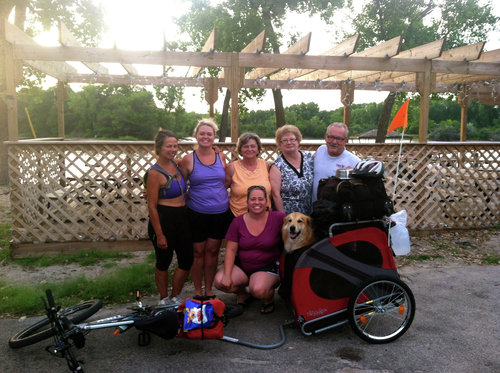
And I have found nothing, nothing to inspire me to take the risk to create rather than evaluate.
Jacob Lawrence once noted that in art, “The Human subject is the most important thing.” On my trip, I learned to fully appreciate the human spirit: its drive to survive, thrive, and unite with other kindred spirits, a lesson I could have never fully learned, fully experienced through deceased artists, authors, rulers, popes or even slaves.
“A typical pair of tennis shoes lasts 500 miles,” the sales associate informed me as he handed me my Birkenstock a few weeks ago.
After 825 miles, my once-new tennis shoes had the familiar smell of dead things. I had worn them well, and after my six-week journey, I knew it was time to retire them.
I am not sure where I will leave this pair, but I realize I have left bits of them all along Highways 20 and 30, marks in the dirt, grass and sand upon which my girl and I have travelled, gathering memories, stories and friends along the way.
As the sales associate reassured me that Birkenstocks are guaranteed for life, I was saddened a bit that I had chosen them over a new pair of tennis shoes. After all, I am always ready for a new adventure, and open toes just aren’t as safe for walking. Or riding, for that matter. I smiled, though, knowing that I had made friends that would last a lifetime wearing my limited warranty tennis shoes, a guarantee that was more valuable than any investment I could ever hope to make, regardless of the purchase, including that of my pricey experience at the second highest ranked art institute in the nation.
Thanks for joining me along the way, and thanks for allowing me to leave behind bits of my tennis shoes with every push of my pedal.
Flooded with Memories: Not Quite Ready to Retire
September 18, 2013
Boulder, Colorado
“I seem to have lost the bike path,” I told him as he rang up my milk while the rain began hitting the sidewalk.
My girl and I had set off once again. This time thoughts of our destination warmed me as no other destination ever could. We were going home to Boulder…or at least a few miles east of the eccentric town where I attended undergrad, took my initial graduate level courses, lived out the first few years of marriage, and gave birth to my children.
Our goal: retrieve a few art supplies and books, submit a few resumes, and see what was left of our fractured family.
Since I knew the 60 mile round trip would take a few days, I checked the forecast. Typical Colorado autumn: sunny skies, chance of afternoon thundershowers with highs in the 80’s. Perfect.
Colorado with its reputation for biker-friendly drivers has also invested millions of lottery dollars in an extensive network of pedestrian/bike trails. I had never imagined they would be so accommodating: smooth concrete stretched in front of me, spanning the entire distance across the city, extending into the mountains.
Yes, the roar of two Interstates and one state highway loomed nearby, but it didn’t drown out the call of the herons or the relaxing sound of the two creeks that the well-maintained path followed.
We shared our lunch, and I marveled at the ease with which the girl could cool herself in the creek, luxuriating in the clean waters that passed through Denver’s industrial district of Commerce City. The bucolic scene stood in sharp contrast to our experiences in the littered rural sections of Iowa or industrialized areas of Nebraska.
By the time I reached the third detour sign, the predicted afternoon storm clouds were gathering.
When I had first encountered construction early in the day, the foreman at the site informed me that because summer bikers were no longer on the path and to avoid delays caused by Denver’s harsh winter weather, the Parks and Recreation Department had begun making minor repairs to the slightly weathered concrete primarily along the underpasses. He assured me each of the areas was short and passable if I were willing to dismount if necessary. If these accommodating ribbons of concrete were the end result, I welcomed the few detours along the way.
As the rain continued to fall, the cashier pointed over my shoulder to a fenced-in section abutting the convenience store parking lot. “It is behind the fence. The path runs right along the creek, and it is a bit of a drop, so they protect most stretches with the fence,” he informed me, adding, “There is a park just across the street where your dog can run for a few minutes, and you will find the entry to the path just on the other side of the street.”
By the time I exited the store the rain was torrential. I had left the girl and my rig safely protected under the store’s awning, and she and I watched the water obscure our view of the creek less than 40 feet away. Wave after wave of lightning brightened the sky, an unusual weather pattern since typically thunder announces the onslaught of a Colorado storm, often giving way to a more gentle rainfall once the initial fury of mountain storms have passed. It appeared as though the dark clouds were circling back upon themselves again and again.
An hour and a half later, the bubbles forming on the puddles indicated only a few heavy drops were falling, so the girl and I walked our rig toward what the cashier had identified as the creek path. As we caught a glimpse of the swollen, rushing waters, I was thankful for my poor sense of direction: the path was inundated, and the waters swarmed half way up the underpass where I had originally hoped to wait out the storm.
Two days later, as I sat at the westernmost tip of Boulder listening to the sound of rain tapping on the roof of my daughter’s car, I was reminded of numerous back-of-the-station-wagon weekend camping trips I made with my father and brother.
One of the distinct odors I recall from my childhood is that of musty sleeping bags, army-issued inflatable mattresses and a damp canvas tent.
Before my parents’ divorce, before my eldest brother had enlisted and been sent to the fields of Nam to return as a cold-blooded monster, before too many angry words had been shouted by parents who realized their lives were falling apart, each summer all ten of us would somehow wrestle a family-sized tent, our tightly-rolled cloth sleeping bags, cooking and fishing gear, and enough food for ten days into our hot, overcrowded station wagon.
Young enough not to remember the destinations but old enough to recall arriving at the camp site well after dark, I ran errands, following the commands barked by my Navy-trained father as we struggled to set up the tent by glowing, warm flames of the campfire and sparser, cool light of the smoking kerosene lanterns.
I would jog from car to campsite vainly attempting to keep warm, welcoming the fetid smell of the flannel-lined sleeping bag a few hours later after the tent had been successfully, securely erected.
One of my jobs, after fetching the lighter items from the back of the station wagon, was to inflate the mattresses. While my father and eldest brother pulled and pounded the poles, stakes and ropes of the heavy tent, we younger siblings would sit on the picnic table slowly blowing air into the bumpy mattresses. No pump, so in the thin mountain air, I would blow until I was dizzy, intoxicated and entranced by the sound of my breath rushing into the dreadful, overly large air mattresses.
For ten straight days, I slept little, always shivering, always fearful that my small body would get wedged in the deep crevices of the air mattress I was told to lie upon.“It will keep you warm and dry,” my father barked at me, but I was convinced I could easily suffocate if I fell into the folds.
“Breathe, Rj,” he would remind me after realizing he had again managed to take my breath away.
“We can inflate our air mattress for you,” each of my generous hosts has offered.
“No, thank you,” I reply, “I prefer to sleep on the hard ground,” silently adding, “I have always feared dying of suffocation.”
On those torturously cold nights with my family, after assuring myself everyone was asleep by counting the number of slow, irregular breaths emitting from each of the others that shared the canvas tent, I would quietly, carefully squirm my body off the mattress, inch by inch, at last relieved to feel the sharp rocks under the tent digging into my skin. Only then would I doze, sleeping fitfully, awaiting the first morning light that would burn off the cold, wet condensation that gathered on the sides of the canvas tent, the same rising sun that would bring the sound of awaking birds, buzzing insects, and the initial stirring of the nine other bodies sleeping beside me.Fearful of being caught in my act of disobedience and anticipating the harsh punishment that always came with any sign of noncompliance, I would quickly, furtively roll back onto the stuffy mattress, breathlessly awaiting the potential discovery of my deviant behavior.
Breakfast proved to be as terrifying as the passing night had been. My mother’s favored form of punishment had been paddling us with her metal spatula, and one of my older sister’s hands still bear the deep scars she incurred while protecting her bared bottom from my mother’s wrath.
While the bitter smell of coffee percolating furiously in its aluminum pot filled the air, she flipped pancakes and fried eggs for her small army of children. Her perpetual rage and resentment echoed silently across the sheer peaks surrounding the campsite that we had set up alongside the quiet mountain stream.Her thin 90 pound frame magnified by the misty mountain morning light created a silhouette more formidable than an angry Colorado black or brown bear could ever hope to contrive.
“Shhh,” he whispered in the middle of the night, gently nudging me. “Don’t move quickly, and you won’t frighten her,” he added.
Rather than pitching a tent as we once had, the three of us on our weekend trips opted to stretch across the back of the station wagon, saving the precious hours it took to set up camp for our excursions that always included fly fishing in the nearby stream feeding the still waters of Lake Isabel.
He slowly reached for the flashlight, flipping it on with his hand cupped over the top so he wouldn’t startle her. The station wagon protected us from the damp air and sharp rocks better than any moldy canvas tent or stale air mattress ever could, and the only remnant of our bygone camping trips were the familiar warm, still musty sleeping bags.
My father didn’t realize I hadn’t yet fallen asleep. Rather than being wrought with fear of suffocating in the folds of a too-large air mattress, the thunder bouncing from peak to peak and brilliant flashes of lighting announcing the rain that hit the roof of the car composed a cacophonous, irregular symphony that had kept me awake.
Slowly, as he had instructed, I raised my body to peer out while he directed the still covered beam of light in her direction, wiping the condensation from the window. The moment he uncovered the flashlight, she, too, raised her body, stretching to her full, powerful height, sniffing intently into the clear night air. He quickly flicked off the flashlight, and she, assured we posed no threat, dropped back to the ground, leading her two cubs across the wet pavement brilliantly painted silver by the full moon peeking through the breaking storm clouds.
I smiled, pulled the warm cloth sleeping bag over my tiny shoulders, and quickly fell soundly asleep.
A week ago after checking the forecast, I loaded the trailer with water in the thermos gifted by one of my new friends, adding my computer, camera, leash, lunch for both of us, and a change of clothing.
By three in the afternoon, we were watching the torrential storms as they flood the bike path.
The following morning, I met my son for tea, and as we walked along Boulder Creek Path, dodging the homeless who had taken refuge in the underpasses, he asked, “So, after your adventure, are you more sympathetic of their plight?”
I paused, struggling to find an answer. “No, not really, not for the most part. I don’t like how aggressively they ask for money, how they refuse to bathe, how they defiantly defecate in public. When homeless, none of these repugnant behaviors is necessary,” I added, explaining that along the way, with the exception of the occasional watering of the cornfields, I would always ride far enough to find a location where I could attend to my personal hygiene and was appalled when offered money.
“Are you ok?” my daughter asked the following day when she dashed through the still-falling rain to the car with a file containing a few printed copies of my resume.
“No,” I replied, wiping the angry, frustrated tears from my eyes, “but I will be.”
For two days, I began my day with my girl at the westernmost parking lot in Boulder, sitting in the same parking lot I had once used as a turn-around spot while pushing my infant children in their stroller on our daily walk along the creek. As my dog’s warm breath formed condensation on the windows, I flipped on the engine long enough to let the defroster to clear the windows, watching the car headlights zoom past, listening to the cacophony of nature’s symphony beat out its irregular rhythm on the roof of my daughter’s car, mustering the courage to hand out more resumes or submit more applications, always hoping for the best.
Both days, I had been joined by an older model station wagon. The passengers furiously wiped away the condensation with a cloth, indicating that they no longer had the luxury of a functional defroster or heater in their car. As they dashed back through the rain from the nearby outhouse, we smiled and politely nodded to one another, patiently awaiting the passing economic storm that has circled year after year across America.
As I drag the collapsed trailer, computer and dog food bag, camera, books, art supplies and change of clothes from my daughter’s trunk a week later, I reach for my worn tennis shoes.
From an apartment perched above the Coal Creek, my grown children and I survived the flood, with only a few items sustaining water damage from a leaky roof. We were among the more fortunate ones.
As my daughter and I drove along the two Interstates I had passed a week earlier and noted signs of flooding along the paths, particularly near the underpasses, I realized it isn’t time to retire my putrid shoes quite yet.
Lessons Along the Way

Stranger or Teacher?
June 30, 2013
Great Western Rail Trail, St. Charles to Sycamore
The people we encounter in the journey of life serve as mentors, teaching us lessons to help guide our paths. I had received numerous warnings against making the trip, all expressing that “It is dangerous out there.” When I embarked, I chose to ignore those warnings, hoping instead to learn new, valuable lessons along my adventure.
After bottoming out for the umpteenth time with my overloaded trailer, I had spent the night stuck in the middle of the Great Western Trail, somewhere between St. Charles and Sycamore, IL.
A couple stopped, asking after my welfare, and after a few minutes, I had told them the resistance I had met while planning my trip. They laughed, adding, “Oh, there are so many dangerous people along the biking trails like ourselves.”
They were recently retired community college professors who have chosen to spend at least a few hours of their retirement biking along the trails within their own state. When I mentioned I had free-lanced as a travel writer after my position had been eliminated at my community college, their interest was further piqued. Like me, the highlight of their educational careers had been taking a group of students to Europe, where Pat had blogged weekly, a part of the job description he enjoyed immensely.
The retired couple has been just a few in a series of people I have met along the trail, and to all of them, I pay tribute, thanking them for the numerous ways they have enriched my journey.
“Safety First”
July 1, 2013
Lost Nation, IL
The approach to Lost Nation happens to be rolling hills, the kind every biker looks toward with anticipatory fear and excitement, knowing the downside means exhilarating speed while the upside means excruciating pain. I knew Illinois boasted a continental divide. After experiencing the height of Colorado’s divide, little did I know that these rolling hills served to direct water either into the Mississippi or the Illinois Rivers.

After sharing our dinner in a cornfield, as my girl and I continued our trip, we were rewarded with the sun setting across the most beautiful landscape I have seen in Illinois.
While I paused to check my GPS, he rode past, stopping to see if I was alright, adding, “I hope you aren’t going far with that,” immediately noting, I am sure, the length of my bike and trailer were twice that of my height. I laughed, flippantly added, “Well, yes, I am going to Colorado. But other than that, I am fine.”
He left, and within a few minutes, he circled back, apologizing, and assuring me he wasn’t a creep but was intrigued by my trek. When I noted he had an off-road bike stashed into his sports car, we began what turned out to be an hours long conversation about biking in his county.
He had grown up in the rolling hills, going through one bike after another jumping and speeding through his beautiful county, eventually competing in amateur and semi-pro racing competitions, showing me his numerous scars and protruding bones from the spills he had taken. I asked him if he ever considered quitting because of the risks his hobby entailed. He laughed, explained that he had taken a few months off after stalling in the gate, hitting the track too hard, ignoring all he had known about safety to catch up with the pack, a breach in caution that resulted in a few broken ribs and a broken thumb.
He explained his seven-year-old son follows in his footsteps, or rather in his tread marks, always being cautioned by his father to observe safety first.
By the time we finally were ready to part, as I strapped on my helmet, I noted our conversation had outlasted the battery in my rear light. Rather than letting me ride the last few miles toward the campground (where he had kindly pointed me toward since the other ones I had passed were closed), he followed me until he knew I would no longer encounter traffic. After he struggled in the dark to attach his small flashlight onto my bike, to assure me he was not a creep, he let me continue on my way alone for the last few miles of my journey.
His words echoed through the hills after we had parted, “Safety first.”
Flooded with Thoughts
July 2, 2013
Dixon, IL

Our first conversation had been one of those awkward ones where you discount the echo as a poor connection whereas the reality is you are talking to one another only a few feet apart. The campground website noted they were closed through the previous day because of seasonal flooding. After spending a few hours awaiting check-in time at the public park adjacent to the campsite and noting the submerged trees, I was less than optimistic, but I desperately wanted to shower before interviewing the blacksmith at the John Deere Historical Site in Dixon, IL
Over the phone, after explaining she had no shower facilities, she stepped around the corner of her building and caught sight of me. As it turns out, she is as remarkably pernicious as I am, and her primary goal as art teacher was to teach her students how to “fix their mistakes,” something she explained while overlooking her five miles of flooded campground.
She and her husband had purchased the tract of land ten years ago, just before he had been diagnosed with cancer. For the first few years, she divided her time between her fifth grade art students, her husband’s “other woman, mother nature,” and his doctors. Only when the physicians declared his cancer to be in remission did she finally retire, leaving a newly remodeled art classroom she had stubbornly fought administration for to a younger woman.
That day as I plugged in my computer, in spite of her puffy eyes and red nose from a summer cold, “the worst kind,” I heard her dropping rocks into a bucket, carrying them from the washed out part of a road to patch a hole from the receding flood waters.
At the Institute, I heard of a special needs teacher whose students had produced beautiful stained glass tile mosaics. The students were barely able to hold a paintbrush, much less manipulate sharp glass. Yet even though it was obvious the students had little—if any—artistic input into the tiles, they remained the administrator’s beacon of pride.
My newfound mentor was never that type of teacher, insisting, even when students asked for a new sheet of paper because they didn’t like their project, that they “fix their problems,” providing a number of other artistic examples from which they could draw their creative inspiration. Their “mistakes,” she often noted, produced some of the best works of art in the class.
As I listened to her rocks hitting the bucket, I couldn’t help but relate life to Rousseau’s blank sheet of paper. How often do we strive to just ask for a new sheet of paper rather than fixing the one we already have drawn upon?
Of Boys, Bikes, Gnats, and Bottles
July 6, 2013
Mechanicsville, IA
In the morning, after the smell of BBQ and sulfur had faded, I was startled awake by my equally startled dog that had chosen at this moment to prove she was worth every exerted muscle entailed in towing her along. The father of one of the families, unaware of our location (a test to my ability to hide myself well, one of my primary goals on the road) had swung around the shrubbery protecting our campsite, and my old girl had sprung to life, barking, baring her teeth, belying the years evident in her limp.
He backed away as quickly as she had sprung forward, assuring her he posed no threat, hoping she would assume the same non-threatening posture. When she refused to provide the assurance, I did, calling her to return to my side, secretly thankful I had recently taken to attaching the leash to her harness before falling asleep rather than letting her run at large as she is wont to do.
A rescue, a scrapper herself, she, like any other scrapper, has struggled with socialization. As her growl faded, the laughing echo of the person I had interviewed two days early reverberated through my memory, and I recalled his jibe, “I bet you don’t ‘work well with others,’ do you?”
As she and I shared our breakfast, our intruder’s son joined him, and before long, the young boy pulled ashore the wide-mouth bass she and I had watched ripple our remote corner of the lake. It was large enough to have required his father’s assistance, measuring about 2/3 the height of its young captor. Within minutes, the fish had barely ceased squirming on the grass, its scales gleaming in the sun, when the three generations represented on the shore declared the trip to be successful, and the boy, aware of the snapping of my shutter, proudly carried his trophy past my now docile dog, smiling almost as broadly as the bass was long, exuding head-to-toe, well deserved pride.
Surrealists believed time loops continuously back upon itself. At that moment, I relived the scornful silence of my father as he struggled to untangle my line with a flopping carp attached to the other end, and understood why my breakfast this morning included tuna from an plastic/foil envelope rather than the latest catch. The image of the smiling young boy and myself at about the same age folded upon that of my daughter hauling in a beautiful rainbow trout from the same shore from which I had been banned after the tangled line incident. I smiled wryly as I pedaled away from the lake with my over-packed haul that did not include a wriggling fish.
Fourth of July weekends at times seem to last forever, and the pop of celebratory fireworks reverberate at odd hours, which is why when I first heard the loud “cachunk” interrupting my reverie regarding fish scented by freshly mown grass, I thought little of it, but my quick jerk/duck reflex allowed me to avoid getting thunked by the offensive projectile: a beer bottle shooting from the side of the mower.
When my children were young, they learned the early lesson not to litter, a transgression which bore deepest consequences. If even the smallest scrap were to slip through their hands without being retrieved, their outcome had been an entire city block (my choice) of cleanup.
Our dusty, windy town boasted an expanse of baseball fields at the edge of town with a chain-link fence that served as a makeshift wind block once filled with blowing detritus. After only serving their time along that fence once, they were careful not to litter thereafter.
I smiled knowing that a discarded bottle would not have been a result of my children’s celebration of the long weekend. I was struck by the ever-increasing awareness that litter in Iowa is, indeed, a problem that has resulted in more than just dangerous projectiles. The litter I had noted abandoned by the bags-full along the most scenic areas along my journey also serve as a breeding grounds for another pestilence of my trip: insects.
After dodging the flying bottle, my racing heart settled into a steady pace, and I longed to be able to escape the annoyance of the gnats constantly circling me as easily as I had shrugged off the temporary increase in blood pressure from taking the near-hit. Yet each time I noted another discarded piece of litter, my ire (as well as remembrances of fear) escalated. Partial solution: at least rid myself of the pesky gnats.
I had forgotten one of the primary trials of living in small towns until I had hit the third one in search of another can of insect repellent. Store after store in one small town after another yielded the same result: “We sold the last bottle a few hours ago,” I was informed. “The mosquitoes, gnats and ticks seem to be particularly bad this year, and we can’t keep anything in stock. I would suggest (insert name of another local store), but they are closed for the long weekend.”
With each subsequent stop as the town names faded one after another, though I couldn’t ascertain the seemingly precious and rare repellent, I did garner a number of observations regarding my bike and my quest—at least the easier one that moved me closer to Colorado sunsets since my quest for insect repellent had been less successful than ticking off the miles as I headed further west.

Nearly everyone I met has either known someone or has participated themselves in Iowa’s RAGBRAI, or Register’s Annual Great Bicycle Ride Across Iowa. The event began in 1973 when two Des Moines Register writers chose to record their experiences as they spent eight days and six nights riding the width of Iowa. Originally approximately 300 people participated, whereas the event, officially limited to 8,500 participants, now purportedly attracts over 40,000 annually. And each participant has been raised to iconic status by their local admirers.
As I began my own trek across the width of the state, the names of towns clicked away almost as frequently as my shifting gears—Grand Mound, Calamus, Wheatland, Lowden, Clarence, Stanwood—each one bereft of insect repellent but resplendent in tales of RAGBRAI and its participants.
Near sunset, as I pulled into yet another burb in a long string of them in hot pursuit of a way to eliminate the extra gnat protein in my diet, I was met with the same response, “No, hun, I sold the last bottle… but I have something even better.” She reached for a small brown bottle of a concoction as local as the ride itself: vanilla oil, assuring me it worked better than repellent would—“at least for the gnats,” she hastily added. “Just use it like you would perfume. A dab here and there, and you are good.”
As I paid for my bottle, she smiled, and gleefully noted, “Hey, I never met anyone famous before.” Her words echoed emptily behind me, and perhaps it was a sense of pride that made me disinclined to point out that I was neither a famous author, artist, or even bicyclist, but someone running from my own ghosts, trying to hold my life together with a tow bar and a bunch of bungee cords.
In addition to RAGBRAI, Iowa hosts Habitat for Humanities and Bike N Build, two other touring groups who traipse across the state on their way from the east to west coast. With so many events, as well as a swelling sense of pride when the locals talk about them, I anticipated Iowa drivers to be more bike friendly than they actually are, and I believed the trails to be more plentiful and easier to access. I was wrong on both counts.
Although I have had my share of honks, hoots and hollers, all to be expected, I suppose, when one trudges slowly up one hill, shooting down the next, smelling something like a cross between yesterday’s BBQ, sulfur and citronella vanilla candles. Yet every push of the pedal, as well as swallow of the gnat, and pop of discarded bottle has been worth the effort, even if I still have yet to proudly walk along one of the numerous Iowa lakeshores or riverbeds towing a fish.
The Road Less Travelled
July 7, 2013
Old River Road, Cedar Rapids, IA
Ever notice that most bike trails lead nowhere, are poorly maintained, end abruptly and follow the most obscurely tracked, hilly landscapes possible? Yeah. Me either. Until now.
Laugh if you’d like, but ideally my trek was to take twenty days, and, with the exception of Ames, IA, I was to spend every night at what I believed to be wild life preserves—the perfect camping grounds in an ideal world.
After the first day, in which I was supposed to cover 50 miles across Chicago, I quickly learned this was not to be the ideally planned trip. My first obstacle came with a six-mile round trip to drop my apartment key at the leasing office, which took up half the day since my dog had chosen to howl every time she felt the bike in motion. So, we walked, with her happily sauntering familiar territory along the lakefront while I mumbled a bit to myself, convincing passersby, I am sure, that I was a bit daft, or I was highly important, engaged in a highly lucrative business transaction on my mobile device.
My second and third obstacles came within the next two days (yes, still within those first 50 miles traversing Chicagoland). I encountered not one but two highways choked with construction. If you are wont to experience road rage under these circumstances while in a vehicle, don’t ever attempt maneuvering the traffic cones, flagmen and concrete pylons on a bike, much less one with a wide dog trailer in tow.
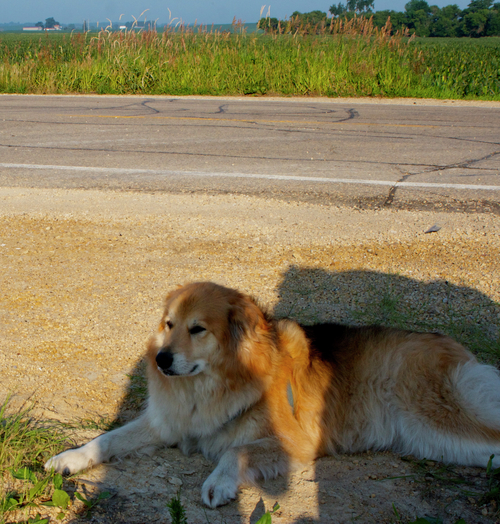
As I wound my way through the city, backtracking here, dodging traffic there, spending an entire day at one point underneath a gas-station canopy to wait for lighter traffic, I should have learned my lesson: Don’t take other people’s advice on the “best” route to take to a particular location.
While I didn’t learn that lesson quickly, I did learn a few other valuable ones during those long days in Chicagoland. One: In spite of my mountain-bike tread, I cannot take the aforementioned wide (and heavy) trailer on anything other than blacktop or concrete. Two: In spite of every compliance with local and state laws, I will be approached by local law enforcement officials because of “calls concerning my safety.” Three: In spite of one-line critiques saying the dog trailer I purchased will make even St. Bernard owners happy, my trailer simply is not equipped to handle my restless, hot, hairy girl. Four: In spite of my well-conditioned legs, my hands weren’t conditioned to pull and tug bungee cords, grip small zipper tabs, and push gear shifting levers.
The most important lesson regarding travel advice that has taken much longer to learn is usually precluded by my approaching another bicyclist and asking, “Excuse me, I am going to such and such destination. I need to stay on concrete or blacktop only. Do you have any suggestions of how I may avoid the traffic on such and such highway?”
They would begin by firing off a few quick, “Take a right here, a left there, then… Oh, wait a minute… I can’t remember if that is at the stop sign or the stop light three blocks later.”
I don’t fault them. Normally, when I am on a bike, I am just enjoying the scenery, not trying to get from point A to B with the fewest, ideal number of pushes of the pedal. Nor do I often have a specific destination in mind. But with over 1,100 miles ahead and 140 plus pounds behind (not including mine), I should be a bit more selective with the paths I choose.
Yet not all the suggestions, though they may have added miles, have led me astray.
I have walked my bike through meadows a car-bound traveler would never see. I have watched fireflies illuminate my path. I have found vine-covered cliffs alongside river rapids. I have seen sunrise and sunset from atop hills that would have never been accessible had I stayed on the concrete or blacktop highways.
In spite of the dead-ends, the gravel, the treks across open fields with the dog walking alongside me because my mountain-bike tread fails to grip grass, optimism abounds, and I find myself asking the same question over and over again. The adage is that insanity is trying the same thing over and over again with the same poor results.
Perhaps those who gave me odd stares my first day in Chicagoland were right after all. Either that, or I still am leading a poetically inspired life and don’t really mind taking the road less traveled.
Missing in Action, Part One
July 10, 2013
Tama, IA
Her question was well-intended, but it has planted the biggest doubt in my mind regarding the wisdom of my trip: “I don’t care about your own safety, honey, but how is your dog handling it?”

As my girl and I rolled past cemetery after cemetery when first crossing into Iowa, I had, admittedly, underestimated our water consumption, a mistake that she and I both deeply felt as we crossed into the wooded hills surrounding Tama.
The early morning thunderstorm and mud-wrestling episode had altered our usual travel pattern of riding only early morning or late evening to avoid the heat.
To make up lost time, and in a spurt of fatefully ill-planned optimism since the temperatures were mild and the sun was obscured behind cloud cover and we were both dripping wet from the shower, I decided to push onward, knowing that our gallon and a half of water would quickly run dry. With careful rationing, I believed we could still make it to the next city. Plus, every time she and I crested yet one more wood-covered hill, she would emerge with ticks crawling in her fur. Since I had applied tick and flea medicine just before leaving, I was rather certain she would be fine.
She had taken to walking since I was unable to handle pulling her up the steep hills, and she loved the freedom of romping in the grassy fields, chasing who knows what through the grass that would hide her for several minutes at a time. I admired and envied her ability to sense the coolest path and enjoyed watching her cavort in the fields while I panted my way up the next hill.
Throughout the day, she emerged a few times covered in mud as well as the aforementioned creepy-crawlies, so I was relieved knowing she had respite from the increasingly hot temperatures and may have even found a few laps of water. I also knew, though, that while she was protected from ticks, I was not, since the same creepy-crawlies began migrating up my body if I took even a few minutes to enjoy the shade she had found under a nearby tree.
By two in the afternoon, some of the layers from my early morning mud bath had begun to crack and fall off my skin, not because it was drying, but because I was sweating so profusely from Iowa’s high humidity that the dirt couldn’t help but slide off my skin. She was no longer finding the mud puddles, and her ire with my determination to continue walking mounted. She was unable to understand why I kept insisting she “Come along,” and hesitated with increasing frequency as I would try to rouse her out of whatever comfort she had found in the shade of yet another tick-infested cove.
Just about the time I thought I couldn’t take another step, an SUV was awaiting us at the next dirt road intersecting the highway. As a woman, awaiting vehicles along infrequently travelled roads make me uneasy, but under the circumstances, I was a bit relieved to see something other than ticks, litter or bogs.
She was the first of three Good Samaritans I met that day, bringing back two gallons of water, a bag of doggie snacks, and a bag of candy, a protein bar and two apples for me as well. She offered to take me into Tama, adding that the hills were rather steep. For the sake of my trip’s integrity, I declined, but took her advice to take a circuitous route, thereby allowing me to skip at least three of the relentless hills.
The ride was beautiful, and because the hills were again manageable, my panting girl had been tucked and zipped back into her trailer. As we rounded yet another curve, I noted two things: I was back in the hilly terrain, and yet another SUV had pulled off the side of the road.
Admittedly by this point my girl was overheated in spite of the ice water we had been given three hours earlier.
The SUV happened to belong to a former dog breeder, who rather adamantly insisted that she take Stink the last few miles, adding that the hills only got steeper the closer I got to town.
Exhausted and frustrated that I couldn’t stop because of the ticks, I consented, calling the breeder to check on my girl as soon as I hit the edge of town.
For the first time on my journey, I checked into a motel, anxious to at last shower away all remaining traces of the morning’s dirtier rain shower. I was streaked with mud, sore from too much sun and disgusted with my poor planning.
With the assurance that Stink had been a well-behaved guest for the second Good Samaritan of the day, I anxiously peeled off my crusty clothes, knowing at once that I would be lightening my load, tossing my shirt and socks straight into the trash, only to realize immediately I had left my cell phone sitting in my dog’s trailer.
Unwilling to pull the dirty ones out of the trash or dirty yet another outfit by slipping a clean one onto my filthy body, I made another stupid decision. I would retrieve my phone, I thought, AFTER my shower.
As soon as I emerged from my room, clean and fresh, I knew I had once again chosen poorly. My phone was no longer in the trailer, but the dog breeder who had rescued my girl was awaiting me.
My girl and I had a happy reunion, and she looked almost as refreshed by the car ride and air conditioning she had enjoyed as I did from my shower.
Before departing on my journey, my daughter had insisted upon an app that allows her at any given moment to identify within 15 feet where I am. Or at least where my phone is. I would strongly suggest anyone embarking on any long trip download a similar app.
Because of it, we knew the phone was still on the premises, so together the motel manager and owner launched an investigatory recovery team, carefully searching every cranny in my room as well as the area outside where I had been. The blip indicated it was located right next to my room, so the local police were called, and a voluntary search ensued.
The four of us—the owner, the manager, my dog, and I sat on the motel’s porch for hours following our fruitless search, munching some of the candy provided earlier by the first Good Samaritan, watching to see whether or not the signal changed. Right before we were about to call it a night, one of the residents joined us, and shortly thereafter my daughter sent her last image.
My phone had seemingly moved a few feet.
Unwilling to disclose that I was aware at that point of its movement, I grabbed a flashlight, feigning one last search before heading to bed, not revealing to my other two treasure hunters (as well as the other resident) that the phone had moved. My search yielded nothing, but I was sure with the morning light, it would.
The following morning, the resident was gone, but luckily, my phone signal wasn’t, and the manager, after just a few minutes search, found it tucked into a plastic drainpipe at the side of the building.
Three Good Samaritans in twenty-four hours more than made up for the one sour apple in the bunch.
Missing in Action, Part Two
July 12, 2013
Marshalltown, IA

Upending my trailer in the mud wrestling match and running low on water had shaken my strength and confidence. I lingered, enjoying the company of the motley crew at the motel, which had a number of regulars as well as locals who enjoyed joining whomever happened to be enjoying the welcoming porch.
I relished the moments reminding me of why I so desperately missed the small-town camaraderie while bustling daily through the concrete jungle along Michigan Lakeshore. Watching sunset, searching for frogs (or lost phones), or petting dogs while rocking in a chair are some of life’s richest pleasures.
After two years of city bustle with appointments and parties, recitals and gallery openings, classes and committees, my soul needed the refreshing succor of rediscovering a simpler life. After only two days of small-town solace, I was at last revived well enough to continue.
Even before the smile had faded, though, I was hit with the other side of humanity’s reality.
My girl and I had fallen into a pattern: wherever I land, we find a shady tree under which she may rest while I step into a nearby building to eat, to blog, to shower…whatever we humans think we need to do to survive.
A friend from the motel had chosen to meet me for lunch at the next biggest town, driven to the larger area as smaller town citizens are wont to do when they are unable to find what they need within their own small town limits.
Today’s goal for him: a key the local hardware store was unable to cut. My goal: a few miles closer to home.
The restaurant we had chosen to meet at was closed for remodeling, so I left my bike parked under a shady tree, taking my girl with me to another restaurant, where I did my typical action, securing her to yet another tree.
While pacing the confines of my concrete jungle, walking to and fro researching Chicago’s public art, she had been my constant companion, trudging along beside me, plopping to the ground patiently awaiting me while I conducted my interviews, shooting my images, flipped through my guidebooks. She and I had become comfortable companions, understanding one another in ways I honestly never expected to achieve with such a furry, huge creature.
On those occasions, as well as those along the trip, when we were separated visually, I would always greet her well before reaching her, and she would stand, stretch, and wag her tail in greeting.
As my new acquaintance and I approached the tree where she had been fastened, my heart sank. She was no longer there. My chest tightened, and I was shocked how quickly the feeling turned to sobs, which didn’t cease until I had placed three phone calls to the local police, human society, then city vet.
It appears a “concerned citizen” had contacted the police, who in turn directed the person to the humane society, who, like the police department, had encouraged the “concerned citizen” to leave well enough alone, that the dog did not, indeed, appear to be “abandoned.” The person chose to take the dog to the city vet, taking it upon herself to do a “welfare check.”
The vet staff was helpful, chuckling a bit at the situation as she wagged her tail in greeting as soon as she heard my voice.
Missing in action. If the trip, as it turns out, is too hard for my old girl to handle, even if I arrive safely, it will have been made in vain.
Perhaps I need to reevaluate the wisdom of all my decisions. Some things, as I have learned, like a wagging tail, are bigger than anything else in the world….
“Train up a Child”
July 15, 2013
Ames, IA
“How did you train for your trip?” the beautiful young lady asked as we shared breakfast on her porch.
I hesitated. How do you explain to a sixteen-year-old girl that every breath she takes, whether in pain or pleasure, ecstasy or mourning, while sleeping or exercising becomes a building block for the next breath, and every breath she will take thereafter will prepare her for life?
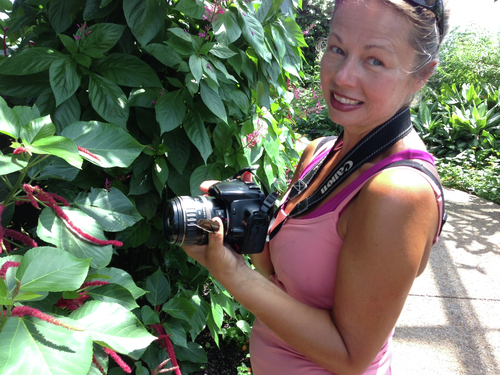
Too often when we as adults talk to younger people, we slip into cliché, using trite sayings to explain why we are where we are in life.
“Tee-Gee, can you pick it up yourself?” I remember my mother asking the first time I had ever packed anything into a suitcase.
I hated the nickname. She and my family had taken the words to an old nursery rhyme and adapted it just for my sobriquet, and every time she called me that, I cringed, recalling the frequently repeated taunt: “Tee-Gee, Gee-Gee, Puddin and Pie/ Kissed the boys and made them cry/ When the girls came out to play/ Tee-Gee, Gee-Gee ran away.”
I had been taught from the very outset of forming my gender identity that as a girl, my role was not to be sexual aggressor. “Good girls should be seen, not heard.” “Good girls don’t call boys on the phone.” “Good girls don’t speak unless spoken to.”
Yet my family constantly taunted me with that gender-reversing rhyme in which I was the sexual aggressor, causing “Good boys” who “don’t cry” to be reduced to tears by my aggression.
Additionally, the adapted rhyme reminded me that not only was I an intimidating sexual presence, I scorned the company of girls, a reversed gender role reinforced frequently when they always referred to me as a tomboy.
Yes, my favorite toys were cars. I would frequently use my meager allowance to buy my brother cars with the assurance, “If you buy it for me, I will let you play with it.”
Boyish, perhaps, but also gullible!
So rather than spending my money on dolls, jewelry, fingernail polish or tea sets—the usual gifts given me for my birthday or Christmas—I bought cars. Throughout the years, hundreds of them!
“If you can’t pick it up yourself, you have packed too much,” she added. Her instructions were practical. After the last round of abuse at the hands of my eldest brother (who is now serving a life sentence for sexual abuse on a child), she had decided to leave my father, who was physically abusive as well.
And as she did, since she had no transportation, the five of the younger children, those to whom she had given birth, would have to literally “walk out of the house.”
As it turned out, the contents I was allowed to take were minimal, and my second eldest sister had to share her suitcase as well as carry the weight for me, a burden that I still feel strongly any time she offers to help me. As a frail, pre-pubescent child, she was too young to have the responsibility of herself, much less her younger sister.
Yet it began the pattern of mothering she would always bear in the subsequent absence of both parents following the divorce.
For a few years, as my brother and I continue to add to his car collection, my muscles were strengthened by games, long bike rides, wrestling matches. I lived up to at least part of the early childhood taunt, still scorning the presence of girls, romping roughly with my older brother and his friends.
Then after my mother remarried, we became nomads. The two older girls were adults by then, and my weight-bearing, responsible sister continued the role she had assumed far too early in life.
When my mother and new stepfather chose to move out of the state for the first time only a few months after their marriage, my sister took on the responsibility as a junior in high school of staying in our home town to help my newly out-of-wedlock pregnant older sister.
My brother and I no longer had our primary caregiver at our disposal, so our games became even more far-reaching, more adventurous, and even more escapist in nature. Rather than relying upon books, chairs, shopping carts or toy cars for our diversion, we became increasingly dependent upon our bicycles for transportation, finding solace in daylong journeys exploring our new territory.
And we had much territory to explore, since we moved at least three times each year for the next four years of our lives.
My mother’s earlier instruction to pack only what we ourselves could lift became our motto dictating what possessions we were able to take each time we relocated. Household items were deemed more important, so for that first move, since we were “grown up anyway,” we had to throw away all our toys, as well as most of our clothes. It is no wonder we turned to our bikes; they had been the only possession we had been allowed to keep.
Yet even that was short-lived, because with the next move, the last sight my brother and I both recall is looking longingly toward our bikes out the window of the pick-up camper shell we shared with the few boxes we had as a family decided to take, a shell that would become our home for weeks at a time as my family struggled to earn enough money to pay for the next apartment deposit and first month’s rent.
The behavior became pattern: don’t acquire anything which may be too heavy to lift, and don’t ever keep anything that has no value, even if it happens to be a sentimental keepsake: a letter of a friend who had promised to be “friends for life,” a gift from our absent father, a picture of a dog we had adopted (and later put to sleep because we were on the move again).
Eventually, we learned not to make friends, thereby eliminating the potential extra baggage of those notes of friendship. Rather, we turned to one another for our own solace, our own friendship, and—since my mother still worked long hours and wouldn’t allow my stepfather to ever fully assume the role of father—even that of our own parents.
With each new location, at first we would trade who got the bedroom and who had to sleep on the sofa. Eventually, not even a sofa remained as an option, since often the only piece of furniture in the living room was designated as my stepfather’s chair.
Then my brother hit adolescence, and since he had “turned into a young man,” the bedroom thereafter was always his. Sleeping on the floor was easy enough; I was small, and it meant making my bed in the morning simply entailed neatly folding a blanket placing it on a shelf.
Initially, with each move, my father would send us Christmas or birthday money, and we would replace our bikes, only to have to give them up again with each subsequent relocation.
During the times between birthdays and Christmases, we would take to the same mode of transportation we had used when my mom “walked out of the house” so many years ago: our own two feet.
How did I train for my trip? I wanted to let my beautiful new friend know that every Tae Kwon Do punch she had blocked, every dance step she had taken, every bag of groceries she has ever bagged, every tear she had cried, every smile she has given trains her for whatever adventure may lie ahead of her in the same way that every breath I have taken up to this point prepared me for my journey.
Pack no more than I can carry, walk away from what I can’t, rely on my bike or my feet for my own transportation and laugh as often as possible.
Train up a Child….
Respecting the Buyer: Who Gets Grandma’s Feather Bed?
July 17, 2013
Carroll, IA
“Often it is the distant family members that are the most difficult to deal with before the sale,” she noted as I admired the antique basket filled with linens sitting on the table beside me.
She had opened her home to me so I could enjoy a hot shower and clean clothes. Her son, a colleague of mine, had been excited to learn I would pass through his small town and suggested I stop by her house.
As I peeled off my favorite riding shorts, I glimpsed at the bug bites trailing across my body, looking more intently for the telling black spots, indications that the pest had not just sucked me for what it needed once and moved on but had decided to take up residence for a longer period of time.
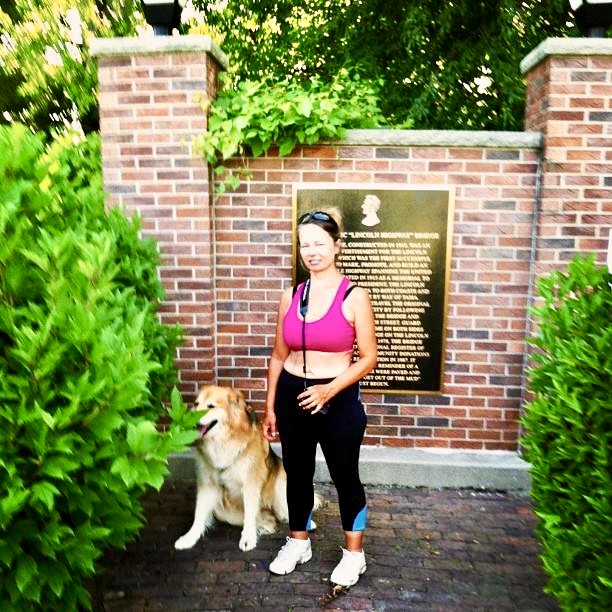
Iowa’s historic Lincoln Byway had been littered with refuse, and the tree-lined marshes were riddled with broken, discarded pieces of furniture, bags of trash, disused toys, cars and tractors, and my body bore the marks of the wreckage that served as breeding grounds for mosquitoes, ticks and chiggers.
Assured that I had successfully removed the invasive critters, I stepped into the first warm shower I had been able to enjoy since crossing the border.
I sat looking at her rich collection of antiques and better understood where my colleague had acquired his exquisite taste – and biting, self-deprecating humor.
She had spent her life as an educator, and her son with his Ph.D., had to a certain extent followed in her footsteps, though her path through education had been spent behind the steering wheel of a bus rather than sitting on a series of steering committees at universities.
Her children had all received excellent educations in the hands of the academic and disciplinarian rigor of Diocesan priests and nuns, and my colleague had the extra training of Jesuits while pursuing his Bachelor’s Degree. She didn’t hesitate to add that she wished that standard of education were available to all students without the exorbitant costs often attached with excellence in education.
Unlike her son, whose passion lies in instruction, though, hers lies in the sale of beautiful objects (though there is an echo of that in his life as well, but he excels in selling brightly colored cashmere on the side).
As with the other antique dealers I met along the road, she observed that after death, one’s family squabbles over minutia, yet the end game always seems motivated by the same driving force: greed.
While the antique dealers deal with what to do with a lifetime of vertical files (or sometimes two, if the business happened to be handed down from grandparents), the family begins to haggle even more than the customers who later attend the estate sales: so-and-so wants this piece because of sentimental value, whereas another claims it had been designated to them a few Christmases ago by yet another family member.
And so the arguments begin, tearing apart what few shreds of ribbon may still bind the loosely connected family together.
“If I have enough pieces of value, I advertise the sale as far away as Omaha,” she added, trailing her finger absently along the intricate carving of the wooden stand beside her. “Once I have advertised a specific item, no family member, regardless of who they are, has any more precedence over the purchase of the piece than any other potential customer. I have to respect my buyer,” she insisted.
“Do you feel as though you got what you paid for?” he asked, after I had presented my ten-minute synopsis of my past two years’ worth of research.
He gave me pause. I had been prepared for every other question except this one. He knew the answer before he even asked it, but he challenged me in front of our peers.
My response would have honestly been a resounding, “No.”
I glanced across the crowded theater, wondering whether or not I should let that single syllable slip through my lips. I hedged, dodged, and skirted around the question, uttering a string of distracting words that slid off my tongue like a well-trained auctioneer.
As educator, that has always been the most troubling question I have faced: will the student ever receive a returned value for their investment?
“I never know what to do with the sets of encyclopedias,” she told me, adding, “It seems as though nearly every estate has one. My son wants one to make a set of bookshelves.”
Like me, he is a bibliophile, insisting upon purchasing books, assigning a series of 200-400 page theory-based books rather than shorter published essays in his class. His syllabus always reflects his earlier training: rigorous and disciplined. And I admire him deeply because he believes in challenging his students.
“Self esteem is built only upon successfully overcoming a challenge,” one of my earliest professors had noted when we were discussing her classroom rigor. “My class size is perpetually decreasing because of my reputation, but I can’t compromise my standards.”
What, indeed, is the value of a good education? Will it be like a skillfully designed piece of furniture that endures for generations to come, or will it be an obsolete piece of litter discarded beside the side of the road?
I push toward another town dotting the map as I press toward my final goal, and I return to the question every single time I encounter the inevitable junkyard on the outskirts of each city limit sign I pass.
Size Doesn’t Matter:
Or Beauty Is in the Eye of the Beholder
July 18, 2013
Arcadia, IA
“You won’t get much sleep here, if you are looking for someplace to stay,” he shouted above the roar of his John Deere tractor.
It was well past dark. I had pushed my girl and myself harder than usual, spending more time on the road than I normally do during our evening ride. Somewhere between Glidden and Carroll, Iowa I lost the shoulder on the highway, and just outside of Carroll, I had the “closest call” of the trip up to this point.
My confidence had been shaken with the squealing tires that had sounded behind me sometime around dusk, and as the two vehicles avoided careening into one another beside me, I had vowed to find a stopping place before dark. In spite of the near miss a few nights earlier, tonight I had approached yet another small town much later than I should have for safety’s sake.
The rolling hills around the tiny town did, indeed, look like a Poussin canvas, but the smell of cows didn’t strike me as being particularly Arcadian. Although I had originally hoped to press on a few more miles, my girl’s cries had gone from the occasional complaint to desperation. I knew she had to go.
“You’re not from a large city, are you?” the professor asked when I explained I had gotten lost on my way to his office.
“I have lived years in Denver and grew up in Seattle. I have also spent extensive periods of time in Chicago, navigating the areas with some measure of success,” I replied.
“You need a GPS,” he suggested.
“I have one. But may I point out your syllabus has your office listed incorrectly, and the school has an annoying habit of assuming that a building’s name, when looked up on Google, will generate an address? It doesn’t. Google is most successful if you have a street address. I would suggest more clear addresses, accurate ones, be used on the syllabi in the future.”
As my girl relieved herself near the railroad track, I wryly noted the smell certainly wouldn’t have given any more offence than the odor that already permeated the air. As she was sniffing about, he rode up to me, adding that he knew his neighbor wouldn’t mind putting me up for the night.
I explained my intention of continuing on to the next town, and he responded that the city park was just up the road and I could stay there for the night, noting that it really was, by this point, too dark to continue riding with any measure of safety.
He then quickly rattled off a number of towns with city parks within the next stretch of road, adding that there were no camp grounds or motels available, but providing rather thorough details of the locations of the parks as well as which features each one had, including swimming pools, potable water, and pavilions, telling me specifically which streets to take get to reach them.
“If people want to stay in their small towns, living in ignorance, wallowing in their cow shit, I say we should let them,” my colleague informed me when I told her where I had taught for ten years. I bit my tongue, a difficult lesson I had learned while at the Institute, noting wryly we were in a class emphasizing diverse approaches to education.
From his information, as I lay in the park with sleep alluding me, I mapped out the remainder of my trip through Iowa; where I would sleep, where I would pass my daytime hours, and where I could hope to find a bite to eat and refill my thermos and camel-back.
“You really should get counseling to determine why you are struggling to fit in here,” she suggested when I met with her regarding my schedule.
I didn’t need counseling to identify why I struggled. I already knew. She just didn’t understand my perspective, in spite of the rhetoric of valuing every voice in the classroom.
Perhaps that’s the difference between a large city and a small town: In both they may know all the right people, where they may live and what vehicles they may drive, an intimacy that tends to generate gossip. In a smaller town, though, the details generate real interest in one another’s lives.
Either way, I have learned if this is what it takes to adapt to “fit in,” I am not a big city girl.
Stations Along the Track
July 18, 2013
Westside, IA
“I am not blocking your wind, am I?” he asked as he pulled himself out of his car.
“Oh, no. Better yet, you are blocking my sun!” I exclaimed.
The girl and I had arisen early in our attempt to beat the heat, developing the pattern of awaking when the birds first started singing so we could get in as many miles as possible before it was too hot for her to safely, comfortably be in the trailer.
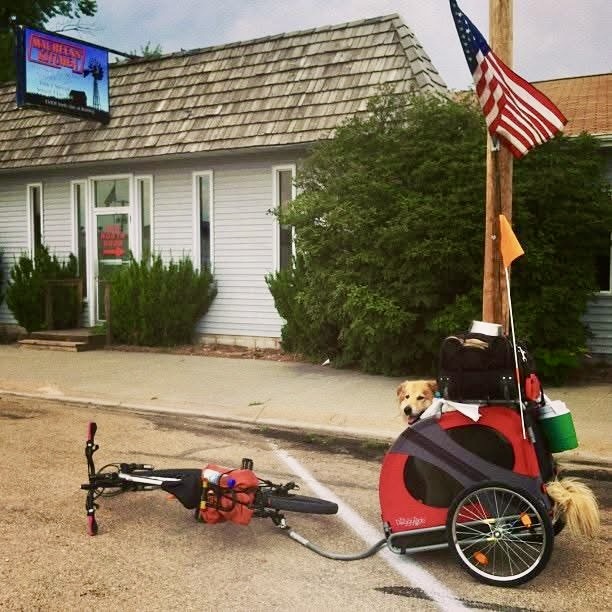
We had also developed the habit of eating breakfast on the curb together; mine a sandwich from a local convenience store, hers a water-gravy treat of Iam’s.
His conversation starter had been as pleasant as what I had a few mornings earlier when a man in a newer model sports car pulled up beside us and asked me if my dog was friendly. After responding, “Of course,” he asked if he could pet her.
After a few cursory strokes, he asked, “May I help you?” When I looked askance, he added, “With money or anything?”
My off-colored responses stuck on the tip of my tongue, but the question made me immediately realize he had either mistaken me for a prostitute (who knows what role Stink would have played in that scenario) or a transient.
That had been the first time, or at least of which I am aware, that I had been mistaken as homeless. When I explained my objectives, he laughed embarrassedly, added, “Well, this certainly is a good way to see the country,” and hurriedly left as though it were a crime scene.
After finishing breakfast, I always slip into the store once more to assure that I won’t have to play the role of a biking cornfield inspector because of my morning coffee. As I did, I noted the driver of my morning’s shade had been joined by a number of other locals, including the one I had met the night before in Arcadia who had provided the detailed directions to the next hundred miles of local parks, useful information since most of the state tour information offices had been closed because of my restricted hours of travel.
I met a few other local farmers, all gathered at the convenience store for their morning coffee and local news feed. They informed me the reason U.S. Highway 30 is dotted with small towns every 8-10 miles is because each town had once served as a train station, and that I had chosen my route well because it was flat, the same reason the railroad ran along the same course.
After noting that I had made slower progress than I had originally planned, my tractor-driving tour guide added, “You would make better time if you didn’t stop for these kinds of conversations, you know.”
“You are going to mention us in your book, right?” my sun block added.
“Absolutely,” I replied, adding, “these are exactly the stories I am gathering along my journey. And if conversations like this take up a little more time, I know I am doing my job well.”
As I left, I realized that while the convenience store may not be as picturesque as the train stations once were, they served the same purpose: providing locals with a place to hear the latest news and aiding passers-by with a welcome respite from their travels.
For those I have met, I am glad our tracks have crossed, even if I do have to pause at the intersections along the way.
“Walk It Off”
July 18, 2013
Vail, IA

What happens when our lives don’t have the Cinderella ending we thought they always would? How do we react when what we thought was the perfect relationship suddenly ends; we are passed by for that promotion because of our loyalty to a co-worker even though it costs us our job; we are asked to retire before we had expected, forcing us to live the rest of our lives on a diminished percentage of our pension; we invest in an education which cost us more in loans than we are able to earn after graduation; we find out a loved one has been given a short time to live?
The clinical responses are easy to identify: denial, guilt, depression. How do these responses manifest themselves in our lives, though? Bravado, cynicism, anger, self-destructive behavior, withdrawal?
“You need to learn how to work your register,” the angry customer repeated to the cashier. How often do we find ourselves reacting in what I call “kick-the-dog” way; we have a bad day at work, at home, at school, and we take it out on the weakest, most innocent victim we are able to find?
As I began to realize there was nothing left of my marriage—an early point six years into what turned out to be a twenty-year marriage—one day after school I had been particularly harsh to my daughter. I don’t even recall what she had done to incite my wrath. More than likely, I don’t recall because she really hadn’t done anything particularly egregious.
My ex and I had lain awake in bed well into the early hours in the morning, a habit he and I had slipped into months before, engaging in what we later jokingly identified as IRCs—Icky Relationship Conversations.
They are easy to recognize if you watch for them. Not just among couples whose relationships have soured, but among bosses and employees, co-workers, children and parents. The expression each participant wears is dark, bordering on a scowl, or worse yet, subtly angry. The body language is closed, and one or both are turned slightly away from the other.
The observer needn’t even hear the words to understand the basic content: the participants are disengaged from one another, and while the words may not necessarily be loud or angry, it is easy to identify the conversation isn’t going well.
As participant, though, sometimes it is more difficult to acknowledge that the relationship has somehow gone awry. All we know is afterward, things just don’t feel “right” any longer, and all too often, unless the problem is resolved, the conversations become more frequent, or, worse yet, they cease altogether because both parties realize there is no solution, and the outcome will eventually lead toward an irreconcilable difference.
The day I lashed out at my daughter, I vowed to avoid a repeated scenario, either with my children, my co-workers, an innocent cashier, or, for that matter, my dog.
“I’m sorry. I have just had a bad day.”
We often throw out those words, and it is at that moment that we must realize we are enacting the passive aggressive behavior of “kick the dog” syndrome.
“If you can’t say something nice,” a famous fuzzy Disney character once said, “don’t say nuthin at all.”
Everyone who has ever engaged in any sport has heard yet another trite saying, “Walk it off.” The wisdom transcends the sore muscles or minor injuries; it applies to everyday life as well.
In every class, as college instructor, I would point out to my students the value of physical exercise, noting how an increased heart rate through physical exertion releases the same endorphins as sexual climax, resulting in lower stress levels.
Laughter would ensue, and I knew I had won a small part of my athlete students’ hearts.
Yes, the trip has been good. Since I am now averaging 23 miles/day, towing approximately 150 pounds behind me, it has been very good.
Much better than yelling at a cashier or kicking the dog…
Changing My Palette
July 19, 2013
Denison, IA
“The headwind will kill you,” he noted after he and his wife had extended the offer to allow me to use their back yard as a campground. “If you find yourself needing to pedal while going down hill, your soul dies just a little.”
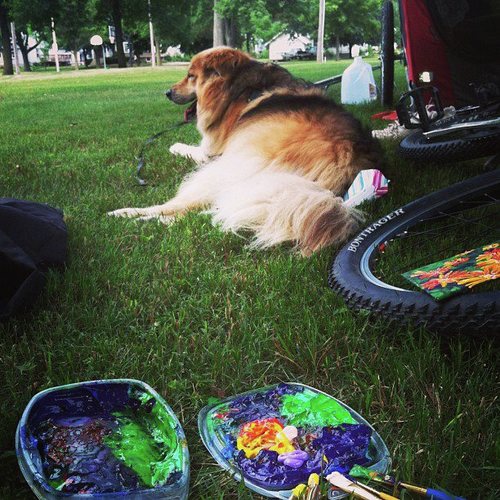
A few hours earlier, they had passed me on the road between my photo shoot in Vail at St. Ann’s Catholic Church and Denison, honking and waving.
As a bicyclist, it is never easy to distinguish the difference between a friendly “Hey, we support what you are doing, good job” wave and a “Get off the road you are blocking traffic” honk and wave. I must confess, though I smile and wave in return, deep down inside, the cynic in me is muttering, assuming the worst regarding the gesture.
How often do we do that in life, assume the worst about people’s motives?
“I wish u would reconsider the bike trip. Its dangerous out there. Please let safety rule over adventure,” [sic] my ex’s wife texted me a few days before I left Chicago.
This had been the first time she had ever spoken to me since she and my husband had begun their affair eleven years ago, and the communication was not welcome.
After a quick exchange of hostile barbs in which I reminded her that she was driving my car and living in my house, I steeled my resolve to embark on my trip.
My grown daughter—who had been particularly stung by the affair since the woman who brought her life as she knew it during senior year in high school to a crashing end had spent years nurturing a “friendship” with her as actively as she had pursued my husband—laughed when I told her of the messages, adding, “She doesn’t know you well, does she? Now you HAVE to do it!”
After two cold, lonely winters in Chicago, riding the El in and out of the Loop three times a week on the notoriously unfriendly Red Line, the cynic in me had bordered more on bitterness.
Suits (male and female) assumed a physical closeness with the homeless, the type of physical proximity I shy away from even in intimate situations. Yet they all refused to acknowledge one another as human beings, losing themselves in their 1 ½ x 3” mobile devices or their own bitterness.
Every time I would ride, rather than losing myself in my own device, I lost myself in the alienating devices of humanity, comparing the commute with its physical closeness to the “hook-up culture” that too often haunts the city-dweller’s interaction with their sexual partners: “I will touch you, use you, but don’t ever expect me to talk to you afterward…”
Yesterday evening, I had for the umpteenth time relied on Google for directions, looking forward to what promised to be my first genuine “camping out” experience since beginning my trip.
Rather than being a Google designated wildlife sanctuary or state park, the icon for this park-like green grid on my GPS had the universal symbol for camping, a small triangle.
I was elated since my motivation for the trip had been a return to nature to wash my aesthetic palette of the smog and grime of the concrete jungle, a full immersion into the baptism of nature.
After my failure to hit Ledges State Park because they had no potable water and I had been led astray by promises of blacktop back roads, I had stopped at a convenience store on the west side of Denison to fill the thermos water jug one of the Good Samaritans had given me near Tama.
I had learned my lesson, one that, alas, follows the theme of “expect the worst.” I wanted to be well prepared, just in case…
“Are there any paved back roads to Sunset Village?” I asked the store clerk.
Her look of skepticism puzzled me, and her single response, “Why?” caught me off guard.
I explained my quest, concluding, “I am camping there tonight.”
She quickly informed me the area was less than desirable, and suggested I circle back around to the campground I had passed four miles ago.
I left the store disappointed, but since I had to circle back into town to pick up dog food, I headed in the general direction of the campground.
As I struggled to push the trailer up a steep hill and manage my dog’s leash at the same time, the grounds person I had met at Vail pulled along side me, and after explaining why I looked a bit more haggard than I had during the heat of the day, he pointed to the crest of the hill I was climbing and noted, “I have seen people camp on the courthouse lawn. I would suggest that over Sunset Village. It is safer.”
I trudged up the remainder of the hill, secured my dog to the trailer, and sat on the curb, frustrated once again by Iowa’s idea of “roughing it.”
Just before sunset, they rode up on their reclining bicycles, noting they were the ones who had waved at me along the highway earlier in the day. I explained my plight, and, without much hesitation on either of our parts, asked me to follow them.
Yes, it may be “dangerous out there,” but I have found within each human heart lurks the biggest danger: ascent into cold misanthropy.
A shower, two glasses of water, an air mattress, breakfast and a two hour session of small talk about dogs, politics and bikes later, I was relieved and grateful to have found yet another reason to wash away the gray palette of bitterness that had colored my world.
Reciprocity: Of Angels and Demons
July 23, 2013
Fremont, NE
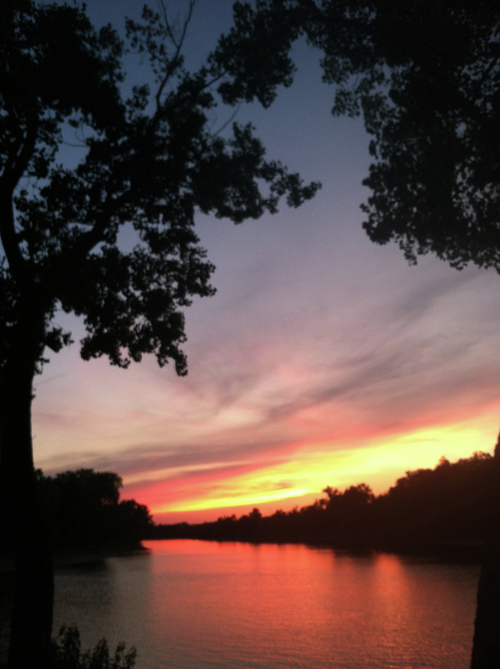
As we sat under the awning of her fifth wheel, she looked at me, smiled softly, and said, “You aren’t travelling alone. You have a thousand guardian angels surrounding you.” After a brief pause, she noted, “I am known to take in strays,” admitting, “Sometimes it gets me into trouble.”
I had dropped by her daughter’s restaurant one more time to charge my phone before settling into my campsite to enjoy my long-anticipated fire. She and two of her regulars were sitting on the veranda enjoying the stunning sunset that had painted the lake with pink, purple and orange hues.
When she stepped in to help a customer at the adjoining bait shop, her friend noted for the first time ever she seemed truly frightened, adding, “As you know, she is a pretty tough girl.”
She is, and she runs a tight ship, jovially greeting her usual customers with their orders even before they ask, yet likewise professionally, discreetly cracking down on her employees when they have breached the bounds of propriety.
The jet skies sent ripples across the pink water as they hummed like swarms of bees past the dock, and he explained that day a camper had insisted he needed drug money.
I knew who the camper was; as he had slowly driven past the restaurant earlier in the day, my girl had emitted a low growl, an infrequent yet perceptive warning I have learned to recognize and respect. Honestly, he had frightened me as well, so when she asked me to stay with her that night, I didn’t even for a moment hesitate giving up my pile of wood sitting near the campground entrance.
She was not the first to extend a traveller’s blessing upon me. My first had come even before I had pedaled a few miles past Wrigley. As I sat eating my dinner on a park bench on Irving Park in Chicago, a beautiful, wizened woman approached me, asking me bluntly in broken English if I were Catholic.
Her directness stunned me initially, but she continued to explain the name of the dog reminded her of a Polish patron saint, adding that she had written a number of books on Catholic saints.
My next blessing came from a stranger in Du Page who noted my trailer was occupied by my girl instead of the typical bike touring equipment, shouting, “Blessings upon you” as I sped past him down one of the first hills I encountered on my trip.
Eventually they became commonplace: “May the Lord rain down blessings upon you,” “God bless you,” and even the single word, “Peace.”
Each brought a lingering smile and a sense of well being, if nothing more.
The phrase, “I am so blessed,” which is usually followed by a description of material abundance has always troubled me. It indicates that those who are bereft of material abundance, by extension, are not blessed, and when I hear the trite saying, the verse “Lay up your treasures in heaven” immediately comes to mind.
“Do you believe in God?” my host for the evening asked. I smiled ruefully, understanding that this phrase means so many different things depending upon one’s culture.
“I believe in a higher, creative being, yes,” I always respond when asked.
If we believe in God, whatever form our creative being may take, how does that manifest itself in our lives, and how do we in turn manifest our beliefs?
“RIP….” His dog had been shot in his backyard, his post on Facebook read.
I cried. Just a few years ago, I had spent Christmas with him and his family in Mexico, and my last memory was of him hugging his dog. His home is now riddled with bullets, but all he lost, fortunately, was his dog.
“Love thy neighbor as thyself.”
The Golden Rule is repeated in different forms in a number of cultures, first appearing as the notion of reciprocity in the oldest written laws, the Babylonian Code of Hammurabi. It occurs in ancient Greek paganism to Confucianism to Hinduism to Taoism, extending into Judaism and Islam traditions as well.
How do we define our “neighbor?”
The story of the Good Samaritan comes to mind, a tradition that includes those outside of our own cultural or racial experience.
I heard the phrase repeatedly: “Most of the towns along 30 changed once the meat-packing plants moved into the areas,” usually followed by an explanation that Nebraska has the second highest rate of undocumented Hispanic workers in the nation.
Blessings and godliness seem as though they should go hand in hand. “As you have freely received, freely give.”
Even if I am not blessed enough to be surrounded by thousands of guardian angels, I have encounter a number of them along the highway, including tonight’s host, whom I now number among my newfound friends.
For tonight, yes, I feel blessed. I am fortunate enough to have great company, shelter, and money to buy my next meal.
For those who are not as fortunate, I wish them well, and pray to the higher, creative being in whom I believe that they, too, may have the blessing of stumbling upon the same gestures of neighborly love I have found along my journey.
Starry Knights
July 28, 2013
Wood River, NE
“Do you need a pump?” he asked, as he pulled up beside me in his bright red pick-up.
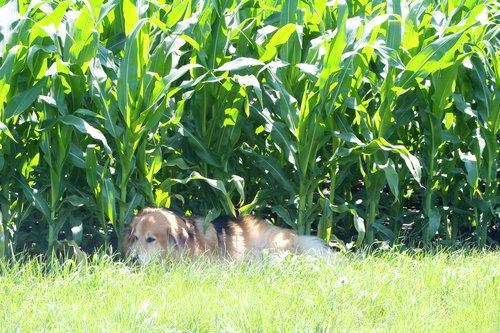
It was my third flat in less than twenty-four hours. “No,” I responded. “At least this time I have a flat at a station that actually has an air pump. I think I have been riding on this one for a while.” I had blamed a headwind, hills and the solid tubes I had installed just a few miles back, but I had a feeling the flat on my back bike tire may have been the cause of my slow progress the past several miles.
Less than two days ago, I had excitedly posted a picture of my first sunflower, marking that I had at last hit the High Plains I adore. I knew my first glimpse of my beloved mountains would soon (relatively, since I was traveling at a painfully slow pace) follow.
I had forgotten that alongside the sunflowers lurk far more malevolent beasts, what I had always called goathead stickers. I had a quick reminder with two successive flats in a single day on the field side of my girl’s trailer.
The following day, I had replaced another tube, this time on the rear of my bike, as I headed out of Grand Island, NE, only to be greeted by a resounding, jarring “pop” less than two miles out of town. Since I knew it was several weeks past fourth of July, I doubted it was a firecracker that had exploded, especially since the immediate weight increase behind me was almost more effective than if I had slammed on my brakes.
“This is ridiculous,” I muttered to my girl as I led the confused, bewildered and frightened dog out of her trailer. I had already devoted over six hours of pedaling time that day to chasing down extra tubes and pumps, discovering that air at convenience stores was almost as rare as non-super-sized soda cups.
Not wanting to damage my rim, I unloaded the luggage for the umpteenth time that day, making several trips from the site of the mini-explosion to a mobile home trailer park where I used a stop sign as a hitching post, tethering dog and trailer with a U-lock.
A group of curious eyes had watched me from afar, slowly peering out from behind an SUV after their initial scream of fear when they spotted my dog.
“Don’t worry. She is a very friendly girl,” I called out to them, directing my reassuring gaze and smile toward the oldest among them, a leggy, dark-eyed pre-pubescent girl who still held a protective hand on the shoulder of the youngest child.
Hearing the intonations of the children, I asked her in broken Spanish if she spoke English. She nodded. Relieved, I asked if her parents were home. She shook her head no, but ran into the trailer anyway, emerging with a young man in tow.
I hastily described my predicament, explaining that I would have to leave my dog and trailer secured to the post while I pedaled back into town to buy more tubes, attempting all the while to convince him that my dog was quite friendly.
Slowly, the children approached my girl, asking if they could pet her, commenting on her size, the softness of her fur, adding that they had a dog, a Chihuahua, but it was much smaller; the small, delightfully free talk of children once they feel comfortable with a stranger.
I knew she would be in good, attentive hands for the next hour or two.
“You only bought two solid tubes?” my daughter skeptically asked as I juggled the phone in the line at Wal Mart. I laughed, cursing her for cursing me, adding that I knew they would slow me down substantially.
Just before I had taken on the task of yet another tire change that evening, I had called her, jokingly cursing her yet again for cursing me. She laughed, glimpsing at my locational blip on her phone and added incredulously, “You mean you have ridden the past twenty miles without realizing you had a flat?!”
“Hey, at least I got a good workout,” I responded, cutting the conversation short, offering the excuse that the light was waning.
Knowing I wouldn’t make it to my next destination, a campground located several miles away, that evening as he pumped air into my newly installed tube, I asked my rescuing Red Knight if his town had a park where I could camp for the night.
“Yes,” he said, hesitatingly. “We should have alerted the sheriff though,” adding, “He was here just a second ago.” After pausing a moment, he added, “Why don’t you follow me? You can camp in my back yard. It is a bit further off the main road than the park. It will be safer.”
After the retired military jumper/satellite corn farmer had given me a brief tour of his yard and garage, supplying me with grime remover and lubricant for my chain, he explained, “I would stay out and visit a bit longer, but I am the church trustee. I need to get up early and unlock the church doors.”
As I settled into my warm down for the night, enjoying yet another perk of the Plains—the most stunning display of stars I had seen since leaving Colorado over a year ago—I was again thankful I had stumbled upon yet another example of small-town chivalry, if not another angel unawares.
The following morning, as I sat sipping my coffee on the curb with my girl outside of what had turned out to be his mother’s convenience store, I basked in the warm sun, fueled, refreshed and pumped for yet another long day of riding
Longing for Intimacy
July 29, 2013
Kearney, NE
“Yes,” she laughingly assured me, “the numbness will eventually go away. Don’t worry, we all get it with our first tour.”
Some tidbits of knowledge just can’t be found in books or guides, and I had the good fortune of finally spending time with others who had toured enough to share a few pointers with me.
To be honest, with the history of heart attacks and strokes in my family, I had feared the worst: mild stroke. My fingers had been numb since the day after I had launched. At best, I believed it was only the same muscular strain that had resulted in my inability to even hold a fork after the first day: too much shifting and braking for my Lakeshore training.
The strength, however, had returned to my thumb (somewhat, depending upon the terrain, how often I tugged at my bungees to load or unload my duffle, and number of flats I have to repair in a day). But the perpetual numbness had persisted, leaving me fearing the worst.
“When can I expect to regain feeling?” I asked.
“When will you stop applying pressure to the nerve?” he replied.
Since I had met them in Denison, IA, and wasn’t even half-way finished with my trip, I knew I would have to endure the numbness, but remained content with the reassurance that it was nothing more than pinched nerves.
When I had the pleasure of joining the Bike N Build participants at the bike shop in Ames, IA, I secretly chuckled to myself as a male rider pointed to a saddle cream (made by a woman for women) and told his companion, “Here, this is what you need.”
Rashes, numbness, toilet paper, cornfield fairies, tailwinds: the private world shared by only those who have toured.
Nothing is sacred.

“You don’t know what de-tassling is?” he asked, explaining that male and female plant parts are incompatible in the production of sweet corn. The work, he added, is hot, tedious, and dirty. While there is good money in going to the field before dawn and hand plucking the tassels off the maturing corn stalks until it is too hot to do so any longer, few are able to endure it for long.
“But you couldn’t do it,” he added, noting my height as I sat at the table at The Tow Line in Fremont, NE. “You have to be at least five feet tall.”
The young mother listened to our conversation, keeping her eye on her children as they played in the nearby lake.
“She is getting to the age where I am afraid her friends will begin using her to get closer to her brother,” she noted, after shouting at her son again for picking on his sister and her friend. “I don’t understand why the girls always have to be separated from the boys. I wish they could all just be part of the same group.”
I silently noted the irony of the two transecting conversations.
Size and gender: sensitive issues for me. Is separation of gender as necessary in humans as it is in the production of sweet corn?
“Is there a difference between male and female cornfields?” I asked the other biker as we both waited for our bikes at The Bike Shed in Kearney, NE. After hearing of my quest, they had generously agreed to squeeze me into what they had identified as an already full schedule.
“It is all in the direction the corn points,” the other biker responded.
After sharing my up-ended photo from my cornfield encounter, he warned, “Beware of those cornfield fairies. They are always up to no good,” adding that only the very worst ever comes of relieving oneself in a cornfield.
My brother, still an avid bicyclist in spite of finding himself on the far side of a hood attached to a hit-and-run vehicle, after I told him of the reversal of aging I had recently undergone, laughed, noting, “Yeah, biking will work anything out of you. It is a great cure for constipation as well,” adding that on those days, he is thankful for a good headwind.
“I prefer the headwinds over the tailwinds,” the biker who had warned me against the seductive, evil cornfield fairies later noted.
Combined with my brother’s earlier comment, I thought, “Yeah, if you don’t like corn fairies well, it explains why you prefer the headwinds!”
As we sat at the breakfast table in Denison, I held up my hands again, mingling my laughter with hers, noting that I couldn’t wait to no longer have the inevitable chain grease embedded under my fingernails, adding I felt as though I always looked like a cross between a transient and a mechanic. She agreed, assuring me it was part of the touring world and suggested I purchase a pair of riding gloves for the numbness and inevitable layer of dirt encrusting my hands.
She added that she kept her gloves on throughout the tour for everything—yes, EVERYTHING, including washing her hands at every possible turn in the road. I smiled, reflecting on her advice as I reached for a pair of riding gloves the same color of the Red Knight’s pick-up who had directed me to Kearney’s Bike Shed.
Later, as her husband began giving me directions how to leave their campground/yard in Denison, I reached for my GPS, handily stored in the most convenient pocket every female biker has. She laughed when I apologized, adding that she, too, used to use her sports bra as a convenient phone pocket until she went through a few of them (phones, not sports bras) because of the moisture, something that the male riders were unable to do.
I added my touch screen, already cracked from a previous toilet accident, no longer readily responded to my touch.
Human touch, a sense of belonging, a sense of uninhibited intimacy. We all long for it. I am glad I have found it, unexpectedly, in the community of bicyclers and campground hosts I have encountered along the way.
A Family Affair: Going In – or Out – Of Business
July 30, 2013
Overton, NE
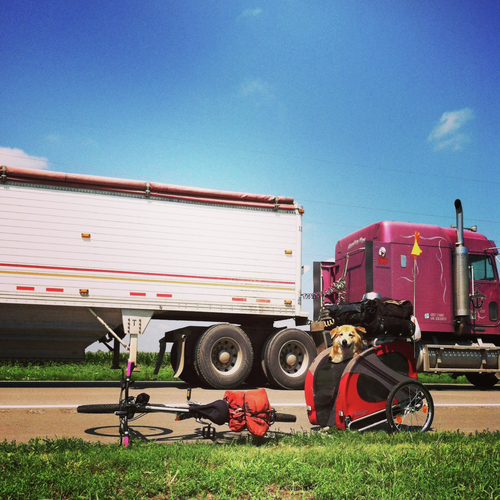
“When we were back east, we had eleven people and three generations of our family living in one overcrowded home,” she informed me as we sat together at the small wooden table in the corner of the family run convenience store/garage.
In addition to catching up on the local news and weather report each morning, I would hit the first convenience store we would stumble upon after entering a town, pick up a small bottle of milk, fill my thermos with ice, and hit the since most public parks my girl and I passed our hot afternoons in no longer had them.
“Does Overton have a free wifi hot-spot?” I asked her as we met outside of the convenience store.
“Yes, we do, right here,” she responded, as she helped direct me to a shady area across the street in response to my second question. Within a few minutes, we had exchanged stories regarding the stubbornness of Great Pyrenees, brief family histories, and speculations on whether or not America really has begun to escape the grips of the nearly decade-long economic crisis.
One of her relatives had a nearby goat farm, she informed me, and their three Great Pyrenees served a dual purpose: protecting the clans’ children and herding the 75 goats that supplied enough milk to keep the profitable small cottage industry producing cheese, yogurt and ice cream.
The goat farmers had moved east from Fort Collins, CO, and the mechanic (her ex husband), and the convenience store owners had moved west from Vermont, converging on the small town to open their business, the woman at the wooden table shared with me as I downloaded my latest blog and photo essay.
The goat cheese I purchased at the store proved to be one of the healthiest, tastiest meals I had yet enjoyed on the road, and because my sugar levels seemed to have stabilized with the increased exercise, I treated myself to a home-made fried strawberry pie from among the pastries the clan’s grandmother sold at the store.
“It seems all the young people here are in a hurry to grow up and move away to the bigger cities,” the 73-year-old cashier had noted several miles before while I was in Vail, IA. “They often leave for college and never return,” she added, mourning the fact that those few who returned or never left in the first place attended the nearby Catholic church only for their weddings, their children’s baptisms or their parents’ or grandparents’ funerals, spending their Saturday nights at the larger, nearby city’s restaurants or bars, coming home too late to get up for church the following morning.
“Most of the work on our 60 year-old church is done now by retired members,” she added with a note of wistful melancholia in her trailing, faltering voice. “Not that I blame the young people. Other than this store, there are no jobs available here. Family doesn’t matter as much, and most of the local businesses have shut down. They can’t keep up with the competition in the larger towns.”
“Where do you shower, and what do you do when it rains?” a truck driver had asked when I was purchasing replacement inner tubes at Wal Mart in Columbus, NE. He had pointed to the stream of traffic heading in and out of the local truck stop, adding that they had showers.
Trucking and meat processing seemed to be the primary source of income in the first town along US highway 30 that intersected the interstate, a pattern that would be repeated hereafter.
I thanked him for the information, but as the storm clouds gathered, I had assurance from a new friend that I had a place to stay for the night.
“I lived in Boulder for a few years,” he said as we were enjoying the first few refreshing sprinkles of the approaching storm. “I also lived in California for awhile,” he added.
My host at the campground in Fremont had opened her home to me, but her husband wasn’t responding to my knock at the front door since she hadn’t been able to alert him of my arrival.
As I awaited her return call, her neighbor and his friend had spotted my girl in our oversized rig and invited me to join them for a beer. I declined the beer, but gladly accepted their second offer, a glass of ice water.
“What brought you back here?” I asked as my girl stretched out on the lawn, lazily eying a cat that had dashed under a nearby car.
“My parents wanted me to come back and help with the farm,” he replied. “Originally, they had quite a large chunk of land. If we had been able to keep it, they would have been sitting on a gold mine because of ethanol production and efficient satellite farming,” he added, “but they had accumulated too much debt to be able to save the property. Rather than farming, I spend my days doing short hauls for the local trucking company, pulling pretty much anything and everything to the nearby towns.”
His children were now grown, chasing their own dreams pursuing non-agriculturally based careers. After spending his days on the road, he often lands at his friend’s house, letting his dogs romp in the grass while nursing a beer or two.
Holding together a family, farm or business reliant upon unpredictable weather and tumultuous economic times is difficult, indeed. I can’t help but wonder why we continue struggling to do so, but as I take another sip of ice water, I smile, relax and attentively listen to yet another string of stories, watching the flattened Nebraska clouds roll overhead while enjoying the sound of passing semi trucks a few blocks away.
In Overton, I savor the last few bites of home-made strawberry pie, toss down my last swig of milk, pick up my thermos of ice, and walk across the street to stuff my girl back into the trailer, assuring her that in a fewer than 150 miles, she will be able to see our family again. We are almost home.
A Dying Tradition
August 1, 2013
Brady, NE
“Everything is homemade,” the waitress assured me as I glanced down at the menu.
“If you want lots of hash browns, this is the place to be,” a patron informed me as I placed my order of biscuits and gravy.

Over a week ago, at sunrise as I descended (after several ascents) into Blair, NE, I was hungry. Again. And in spite of the good company I knew I would always find, I was tired of convenience food. I was ready for a good Sunday morning breakfast. A really big one, and I knew from my childhood that local diners were the best place to find what I needed.
I don’t often look to Yelp since they are the competitors to the travel app for which I occasionally write, but this morning, as I typed in “Restaurants Blair NE” on my GPS, Yelp reared its head, informing me that the food was great and the helpings were generous. Just what I had been seeking.
The review added it was among a dying tradition.
As I waited outside the restaurant, which hadn’t opened for the morning, a couple joined me on the bench, informing me that the breakfast special was not only good but also affordable. “There is no way you can eat it all,” he challenged.
He was wrong.
“How was the sale, Tommy?” the next wave of patrons asked as they entered the door of the diner in Brady.
The group followed upon the tail of a motley pair, a woman and a scraggly-looking, duffle-toting man. As she hugged the waitress, she told her, “Get him whatever he would like. It is on me,” interestingly the same thing the waitress had just heard from Tommy regarding my breakfast.
The conversation at the other table wandered as aimlessly and picturesquely as most of the bike trails I have encountered: through talk of weather; prices of antiques, corn, hogs and cattle; mutilations from machinery that happened over two decades ago; how the local saloons handled the traffic when the “Hawgs” passed through; plans for the next family cruise and the daughter’s wedding. The types of conversations upon which love, life, death and business were built upon in the hard soil of America’s heartland.
“I had to get down on my hands and knees to get it done,” echoed from the other table. “I couldn’t even send a postcard to get him to help me,” he added, as the rest of the table broke out into laughter. Bits and pieces of broken gossip meant to unite and amuse whatever listener happened to be eavesdropping on the conversation.
“Most business in a small town is done over morning coffee,” my father-in-law informed my ex husband when we first moved into what had become my children’s home town, the small rural community where I taught art and literature for ten years.
He was right. Too bad I preferred my coffee in the privacy of my own patio accompanied by yet another book on art history. I am realizing I had missed out on years of news, business, camaraderie.
In the larger towns along the way, the diners have given way to superstores with Starbucks in one corner, deli in another with tables placed somewhere in between.
The chatter is the same, but the atmosphere is different.
The uniformed cashier calls out the same types of greetings, “How are you today?” adding the cliché, “We are all still vertical. That’s all that matters,” throwing in the assurance, “We have spill insurance” as the customer apologizes for the coffee that had toppled from the tray she was carrying.
As my waitress in Brady passes by with the carafe, weaving her way through the meandering conversations and laughter, asking me if I would care for some more coffee, I smile and nod, thankful that my hands have finally adapted enough to the strain of shifting and braking to be able to hold a fork again.
Nearly home, and my overtaxed muscles are just beginning to adapt to the strain of the road. As I swallow the last bit of coffee, I idly wonder what tomorrow’s conversation at the diner will be?
Almost Home
August 2, 2013
Paxton, NE
When I walked into the convenience store this time, I didn’t ask the cashier my usual questions regarding nearby parks, campgrounds or back roads.
Because of the numerous flat tires I had experienced even while on the highway, I knew there was very little chance of following the temptation to veer off the semi-beaten path of Highway 30. Since I was on the last leg of my journey with only 50 miles remaining, I knew precisely where I had to spend the night. And because I was working on a deadline, I knew I couldn’t linger in town for long.
I had secured my girl on the handlebar of my bike in the shade around the corner, glancing at the time and temperature flashing on the sign across the street, mildly surprised at the quick progress I had made.
When I had finished placing my order for a breakfast burrito, I stepped out again with another customer to show him my rig.
Since I was still wearing my leather coat and had begun to share the road with the hawgs as they began their annual migration to Sturgis, he assumed when I said I was riding my bike that I meant motorcycle. I explained once again that no, I was towing my girl on a bicycle, and he responded, “I’ve gotta see this.”
After calling to a friend to look as well, he stepped back into the convenience store while I admired the flowers planted along the side of the building, still wondering how I had made such good time.
I knew I was almost home. The road from Chicago had been long, but here in Paxton, NE, I was on very familiar ground.
For that matter, the road to Chicago a few years ago had been as equally long.
From the time my children were old enough to travel, we had vacationed in Chicago often, and Paxton seemed to be the one stop we always made along the way.
We returned to Chicago year after year as a family, and snapshots of grade-schoolers, adolescents and teenagers fill family photo albums and boxes stored who knows where.
Each time we went, a trip to Chicago Art Institute was as inevitable as a walk along the Lakeshore, and at one point, because of construction, we had to enter through the doors along Columbus Drive usually reserved for SAIC students. On that occasion, I offhandedly remarked, “I am going to attend here someday,” a comment that went rather unnoticed by my adolescent children and husband.
I had just graduated from the University of Colorado with Honors in my two majors, English and Humanities, and I was determined to earn my Master’s Degree at the Institute.
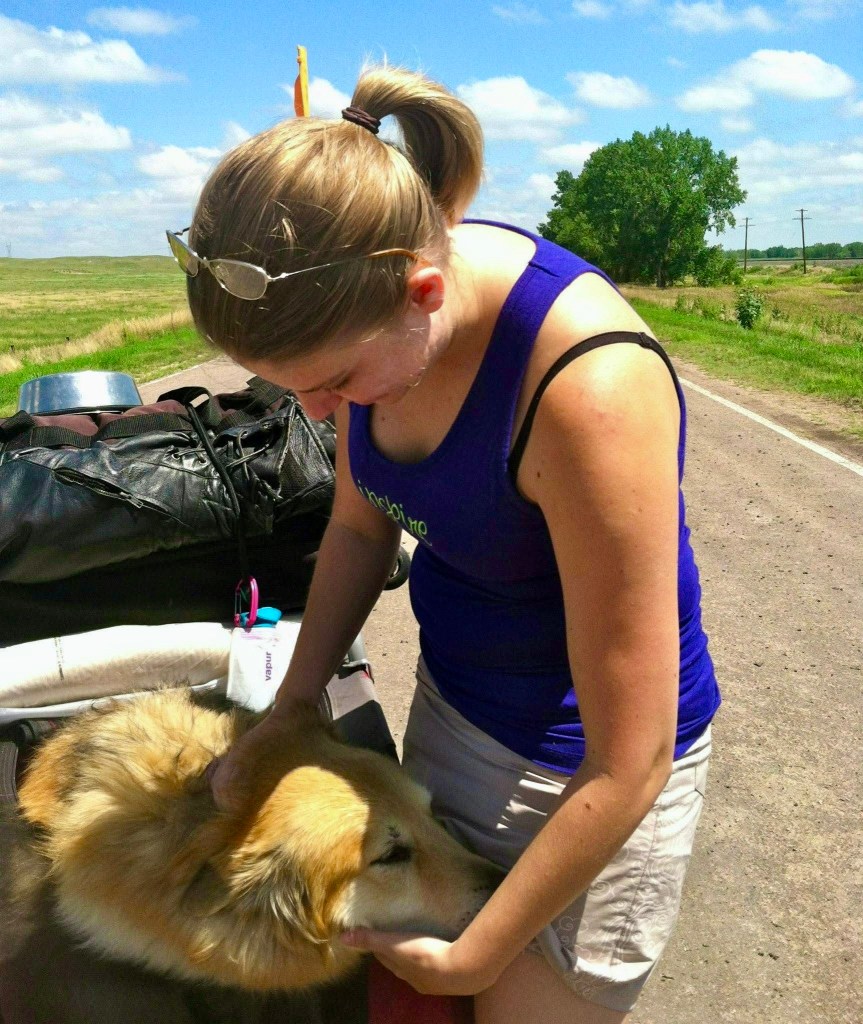
On what was to be our last family vacation to the windy city, as my teenage daughter and I walked past the distinctively dark, clover-shaped Lake Shore Tower, built by two of Mies van der Rohe’s students, I flippantly declared, “I am going to own a golden retriever and live here some day,” another dream that somehow oddly shaped what was to become my future.
We had taken that last vacation with another family, the pianist from our Methodist Church and her husband, the same woman from whom I received a few texts just days before launching my bike tour.
Memories of these events, and so many more leading up to my trip clouded my mind, bouncing through my brain like lightning and thunder.
“Why did you do it? What made you decide to make the trip?”
With nearly each stop along my journey, I was asked the same questions.
By the time I reached the Illinois border, I had formulated a number of responses.
“I wanted to be able to concentrate on my art.”
“Mid-life crisis.”
“For the health of it.”
“Because I have learned I am really not a big-city girl after all.”
“You made it here, in Chicago,” he said, “and you did it without my help.”
“Yes, I did, and I hated every minute of it,” I responded, my eyes filling with tears as I added that I had despised the way he had followed me from afar, watching my progress.
“I am leaving in a few days, riding my bike back to Colorado, towing Stinky in a trailer,” I informed him, quickly adding, “I hope by the time I reach my destination, I will be able to forget you.”
His voice, the sound of his laughter, his hands. He is a ghost that no exorcism — or miracle, for that matter — may ever be able to remove.
Truth be told, I didn’t fully know the answer, or at least the explanation would have taken far too long to ever be told in a single moment, even in the small towns where conversations extend from breakfast to lunch like a lazy Sunday brunch.
As I walked back into the familiar convenience store, for a moment I heard echoes of my children’s laughter as they vied over who got to purchase which bag of candy and caught a glimpse of my daughter’s blond head bob into the bathroom sporting one of the big bows she wore before she was “too grown up” to indulge her mother any longer.
Little had changed in the shop, as it is wont to do in a small town, and time seemed to be circling back upon itself.
The cashier behind me nodded toward my earlier disbelieving companion, adding, “That gentleman bought your burrito for you.”
I was again overwhelmed with the generosity of those I had recently encountered, and it was perhaps for that reason, as well as the visions of my younger children dashing through the aisles of the store, that made me respond as I did when she answered my unusual question, “What time zone are we in?”
“Mountain,” she answered, looking a bit bewildered by my tears. I hastily, embarrassedly filled my thermos with ice, paid for my milk, wiped my gloved hand across my eyes and thanked the patron in the store for his kindness.
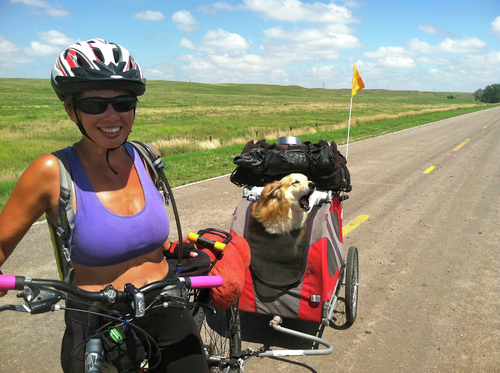
As I sat on the curb beside my girl, visiting with a small group of Paxton’s citizens, strangers who had taken the time to ask me questions and share some of their own stories, I again felt at home in the warm, dry sun of America’s heartland.
Well, almost…

Gathering Rosebuds: Interrupted Reverie
Daisies and daylilies spotting the ditches
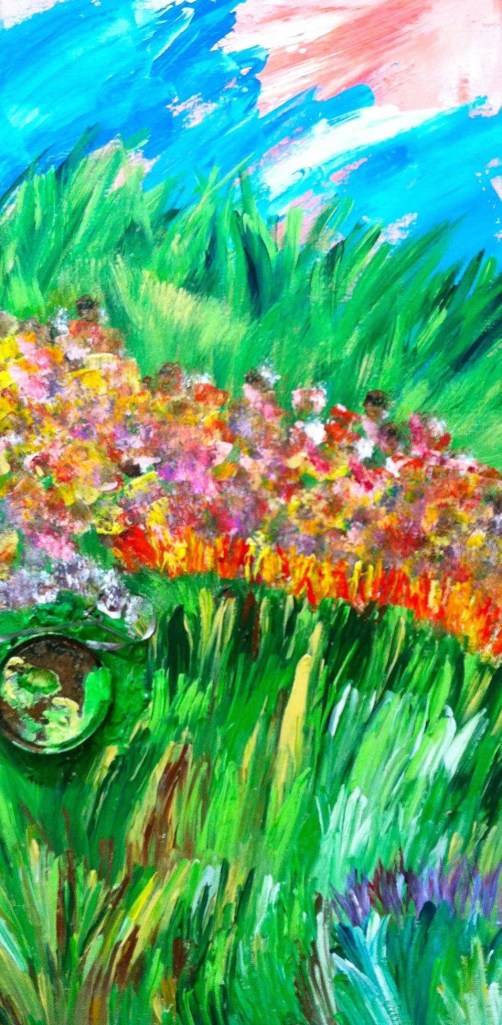
Cornflowers dancing with cornstalks swaying in the wind
Taunting morning flight of red-winged blackbirds
Frog and toad serenading me beside the still lake
Train whistles broadcasting coal, not commuters
Meadowlarks welcoming the morning sun
Mourning doves crying in cottonwood
Unpolished granite glistening in the sun
Barns decaying in overgrown fields
Warning whine of trains on the track
Hawks circling over last night’s coyote kill
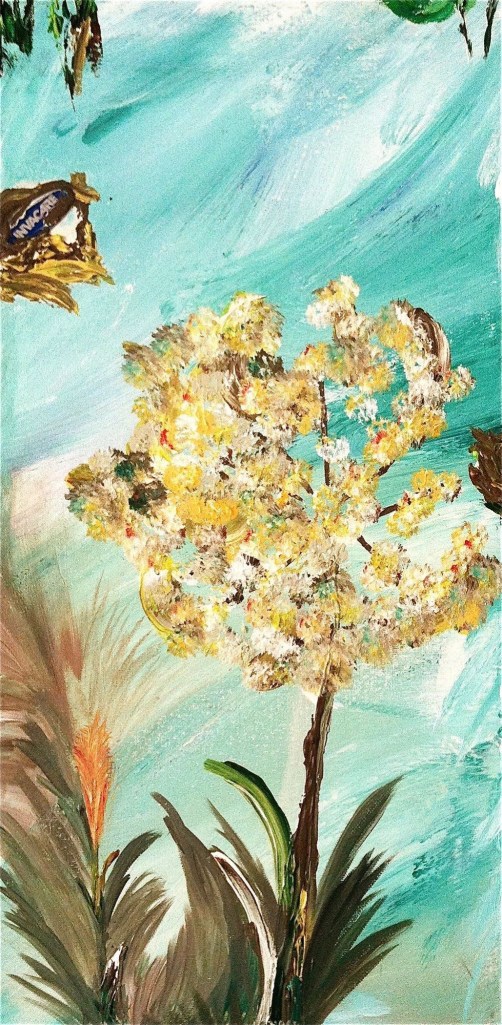
Shriek of an eagle piercing the sky
Creosote, crickets, cicadas and cattails
Mist rolling alongside me through the hills
Queen Anne’s Lace, coneflowers and coreopsis
Freshly mown hayfields scenting afternoon sun
Alfalfa, milo and sunflowers
Yucca, sage, grasses and thistles
The smell of sausage drifting through sunrise
Water reflecting the brilliance of setting sun
Quiet reverie
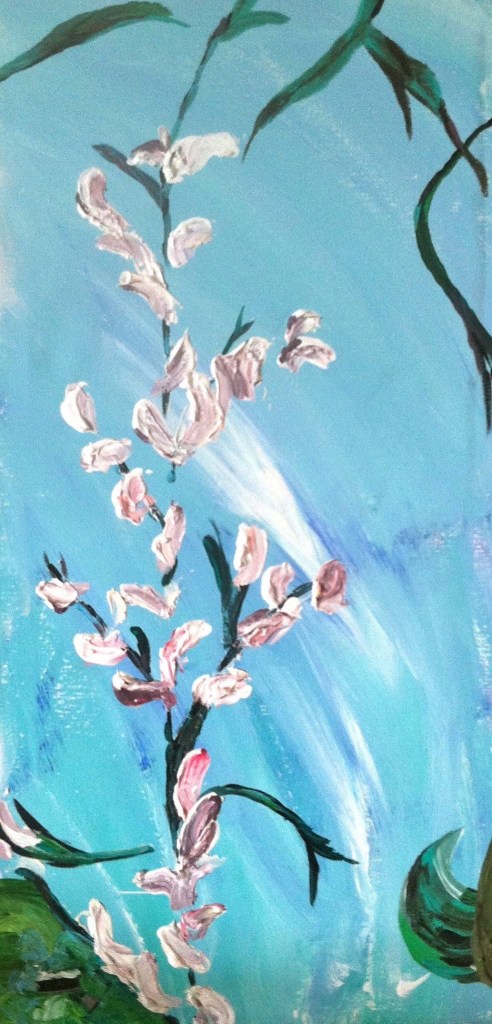
Interrupted by realization
That clicks of gears
Have given way
To the exultation of knowing
I am climbing hills
In the same gear
I had once used on flat stretches of land.
For National Core Standards Visual Arts based curriculum, visit Public Art Ed Curriculum
- Second Grade Assessments introduce emerging artists to portraiture
- Fifth Grade Assessments engage developing artists within their own special space
- Eighth Grade Assessments familiarize growing artists with contemporary practices
- High School Proficient Level Assessments immerse capable artists in critical aspects of art making
- High School Accomplished Assessments encourage skilled artists in revisionary art making techniques
- High School Advanced Assessments initiate superior artists into Democratic social, cultural and political aspects of exhibition practices
Additional helpful links:
- Visual Arts Standards At a Glance
- National Standards Visual Arts Exemplars
- National Core Visual Arts Homepage
 Roberta Molyneux